Tástáil Fola le haghaidh Tinnitis? Aimsíonn Staidéar Próitéin Phrestin Ardaithe i nDaoine a bhfuil Glaoch Cluaise Orthu
D'aimsigh taighdeoirí leibhéil ardaithe den phróitéin prestin sa chluas istigh i ndaoine a bhfuil tinnitus ainsealach orthu, céim i dtreo tástála fola oibiachtúla don riocht.
Bíonn tionchar ag tinnitus, an braistint ar fhuaimeanna glaoch, suirtheach, nó séideadh gan aon fhoinse sheachtrach, ar na milliúin duine ar fud an domhain. Ach d'ainneoin a leathadh, níl aon tástáil oibiachtúil ag dochtúirí fós air. Braitheann an diagnóis go hiomlán ar an méid a thuairiscíonn othair, rud a fhágann go bhfuil an riocht deacair a thomhas, a rianú, agus staidéar a dhéanamh air.
Glacann staidéar nua ó Ollscoil Connecticut cur chuige difriúil. In ionad iarraidh ar dhaoine cur síos a dhéanamh ar a dtinnitus, thóg na taighdeoirí fuil agus thomhais siad próitéiní a thagann ón gcluas istigh féin. Bhí próitéin amháin acu a sheas amach.
Teideal: Serum Levels of Prestin, Otoferlin, Connexin 26, and Stereocilin: A Biomarker Approach to Tinnitus
Údair: Patrick Adamczyk, Rachel Corsetti, Zana Preniqi, Sumeet Kadian, Noah E. Sobel, Sharmaine Wolfson, Daniel Roberts, Erika Skoe, Kourosh Parham
Gaol institiúideach: University of Connecticut School of Medicine; Department of Speech, Language, and Hearing Sciences, University of Connecticut; Division of Otolaryngology, Head and Neck Surgery, University of Connecticut School of Medicine
Iris: Otolaryngology-Head and Neck Surgery, foilsithe an 17 Lúnasa, 2026
Cineál staidéir: Staidéar cohóirt breathnóireachta
DOI PubMed: 10.1002/ohn.70382
Cúlra: Cén Fáth a Ndearna na Taighdeoirí Staidéar air Seo
Tá dhá chineál ceall céadfach sa chóclaí, an t-orgán éisteachta bíseach sa chluas istigh: cealla gruaige istigh, a sheolann eolas fuaime chuig an inchinn, agus cealla gruaige seachtracha, a mhéadaíonn fuaimeanna ciúine agus a ghéaraíonn an éisteacht. Is é próitéin mhótair darb ainm prestin is cúis le cumas méadúcháin na gcealla gruaige seachtracha, rud a ligeann dóibh cruth a athrú na mílte uair in aghaidh an tsoicind.
Tá sé molta ag obair níos luaithe, nuair a bhíonn cealla gruaige seachtracha faoi strus nó damáiste, go bhféadfadh prestin sceitheadh isteach sa tsruth fola. Ós rud é go bhfuil amhras le fada go bhfuil ról ag damáiste do chealla gruaige seachtracha i dtinnitus, bhí sé de réasúnaíocht ag foireann Connecticut go mb'fhéidir go mbeadh leibhéil phrestin atá difriúil go intomhaiste san fhuil ag daoine a bhfuil tinnitus orthu.
Thomhais na taighdeoirí trí phróitéin eile sa chluas istigh freisin: otoferlin, a chabhraíonn le cealla gruaige istigh comharthaí ceimiceacha a scaoileadh; connexin 26, a thacaíonn le ceimic inmheánach an chóclaí; agus stereocilin, atá mar chuid de struchtúr an bhrota gruaige ar chealla gruaige seachtracha. Le chéile, thug na ceithre phróitéin seo léargas leathan ar shláinte an chóclaí ó shampla fola simplí.
Conas a Rinneadh an Staidéar
Earcaigh an fhoireann 82 duine fásta ag ionad leighis acadúil treasach: 41 acu a raibh tinnitus ainsealach orthu sa dá chluas agus 41 rannpháirtí comparáide nach raibh tinnitus orthu. Rinne gach duine tástálacha éisteachta, líon siad an Tinnitus Handicap Inventory, ceistneoir caighdeánach a thomhaiseann cé mhéad a chuireann tinnitus isteach ar an ngnáthshaol, agus thug siad sampla fola.
Is díol spéise é gur chaith gach rannpháirtí dóisiméadar torainn pearsanta ar feadh seachtaine iomláine, a thaifead a nochtadh fuaime sa saol fíor. Bhí tábhacht leis sin toisc gur féidir le torann ard leibhéil phrestin a athrú de réir a chéile, agus bhí ar na taighdeoirí éifeacht an tinnitis a scaradh ó éifeacht poist nó stíl mhaireachtála thorannach.
Tomhaiseadh tiúchan na bpróitéiní le tástálacha imdhíonachta a bhfuil einsím nasctha leo, teicníc saotharlainne chaighdeánach. Ansin, rinne an anailís staitistiúil coigeartú d'aois, do thairseacha éisteachta, agus do nochtadh torainn laethúil, trí fhachtóir a d'fhéadfadh an chomparáid a dhoiléiriú murach sin.
Na Torthaí a Fuair na Taighdeoirí
Bhí prestin seirim i bhfad níos airde sa ghrúpa tinnitis ná sa ghrúpa comparáide, agus luach p de .006 ann. Rud atá tábhachtach, sheas an difríocht fiú tar éis do na taighdeoirí aois, caillteanas éisteachta, agus nochtadh torainn tomhaiste a rialú, agus shroich an chomparáid choigeartaithe luach p de .003. Is é sin le rá, ní fotháirge de chluasa níos sine nó de shaolta níos torannaí a bhí sa phrestin ardaithe.
D'inis na trí phróitéin eile scéal difriúil. Níor athraigh leibhéil otoferlin, connexin 26, agus stereocilin go suntasach idir daoine a raibh tinnitus orthu agus daoine nach raibh. Lean connexin 26 agus stereocilin aois agus tairseacha éisteachta, rud a thugann le tuiscint go bhféadfadh siad seanaois ghinearálta an chóclaí a léiriú seachas tinnitus go sonrach.
Tharraing patrún breise amháin aird na dtaighdeoirí: d'ardaigh agus thit leibhéil phrestin agus stereocilin le chéile ar fud na rannpháirtithe, le comhghaol de .51, agus bhí an caidreamh sin níos láidre sa ghrúpa tinnitis. Ós rud é go dtagann an dá phróitéin ó chealla gruaige seachtracha, neartaíonn an fionnachtain an smaoineamh go bhfuil na cealla méadaithe seo páirteach sa riocht.
Is díol spéise é nach raibh comhghaol idir aon cheann de na leibhéil phróitéine agus scóir an Tinnitus Handicap Inventory. Léirigh marcóirí fola duine an raibh tinnitus i láthair, ach ní cé chomh trom a mhothaigh sé, meabhrúchán nach mbaineann an anacair a chruthaíonn tinnitus leis an gcóclaí amháin.
Cad a Chiallaíonn Sé do Dhaoine a bhfuil Caillteanas Éisteachta Orthu
Do dhaoine a mhaireann le tinnitus, díríonn an líne taighde seo i dtreo rud nach raibh riamh ag an réimse: tomhas oibiachtúil, bitheolaíoch den riocht. D'fhéadfadh marcóir fola bailíochtaithe cabhrú lá éigin le dochtúirí diagnóis a dheimhniú, a rianú an bhfuil an strus cóclach bunúsach ag feabhsú, agus a thástáil an bhfuil teiripí nua ag oibriú i ndáiríre.
Neartaíonn na torthaí an nasc idir tinnitus agus sláinte chealla gruaige seachtracha na cluaise freisin, na cealla céanna a mbíonn tionchar orthu go coitianta i gcaillteanas éisteachta a bhaineann le haois agus le torann. Cabhraíonn sé sin le míniú a thabhairt ar cén fáth a dtagann tinnitus agus caillteanas éisteachta le chéile chomh minic, agus cén fáth a mbíonn tabhairt faoin éisteacht féin mar chuid de bhainistiú an riocht go minic.
Nuair a Théann Tinnitus agus Caillteanas Éisteachta Lámh ar Láimh, Is Féidir Fuaim Níos Soiléire Cabhrú
Cuireann an staidéar seo fianaise bhitheolaíoch leis go mbaineann tinnitus go minic leis na cealla gruaige seachtracha céanna a thacaíonn le héisteacht laethúil, rud atá ar cheann de na cúiseanna a mbíonn deacracht ag go leor daoine a bhfuil glaoch cluaise orthu comhrá a leanúint. Ní cóireáil ná leigheas ar thinnitus iad áiseanna éisteachta, ach do dhaoine a bhfuil caillteanas éisteachta éadrom go measartha orthu freisin, d'fhéadfadh fuaim laethúil níos soiléire an glaoch a dhéanamh níos lú suntasach trí níos mó den fhuaim saoil fhíorúil a bhí ar iarraidh a thabhairt don inchinn.
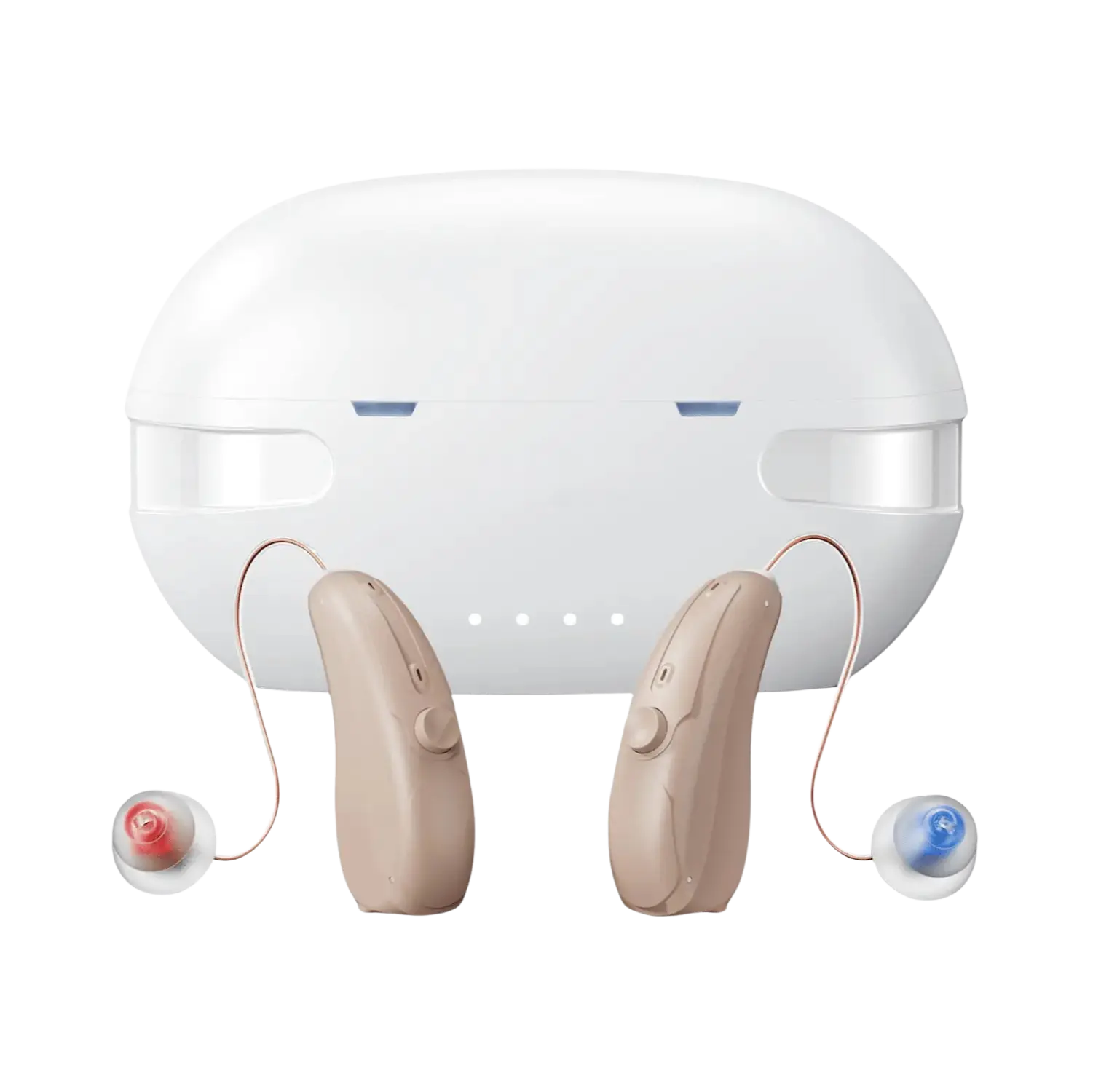
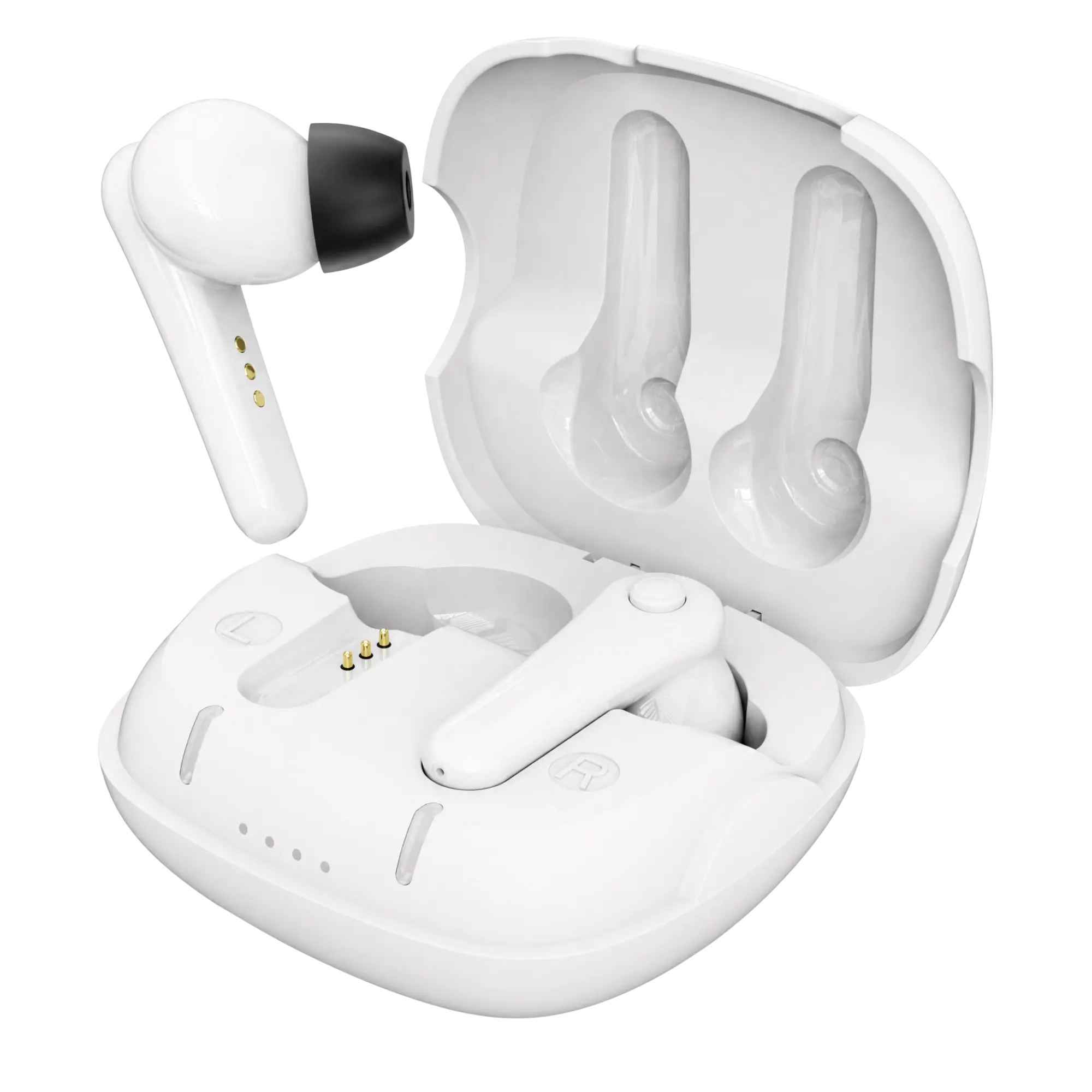
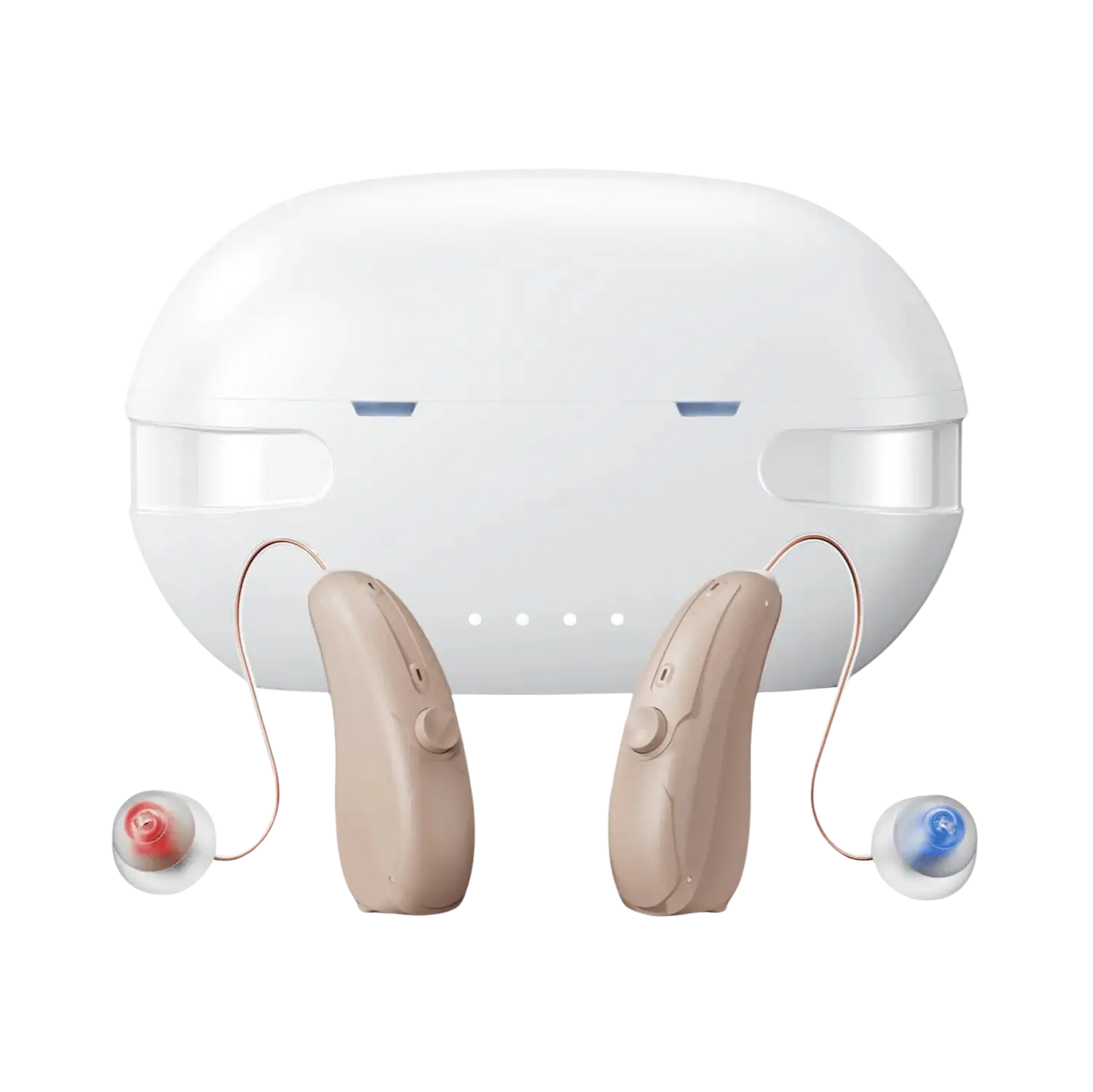
Tá áiseanna éisteachta FDA-OTC níos nuaí tar éis an cineál tacaíochta sin a dhéanamh níos éasca a thriail sa bhaile. Is sampla amháin é an Panda Quantum: gléas 16 chainéal le glacadóir sa chanáil agus laghdú aclaí torainn atá deartha le haghaidh cainte soiléire i dtimpeallachtaí torannacha, móide Bluetooth le haghaidh glaonna, teilifíse, agus ceoil. Maireann muirear amháin 20 uair an chloig, agus iompraíonn an cás luchtaithe trí mhuirear iomlán breise le haghaidh 80 uair an chloig d'úsáid iomlán.

Tá aip roghnach ag Quantum freisin le tástáil éisteachta sa chluas a fhéadann gnóthachan agus freagairt minicíochta a phearsanú do do phróifíl éisteachta, cé go n-oibríonn an gléas go hiomlán as an mbosca gan an aip ná an tástáil. Tagann sé le barántas 5 bliana agus le triail 45 lá a thosaíonn nuair a fhaigheann tú é. Rabhadh amháin is fiú a bheith ar an eolas faoi: tá áiseanna éisteachta OTC formheasta do dhaoine fásta a bhfuil caillteanas éisteachta éadrom go measartha orthu, agus baineann caillteanas déine nó domhain an tairbhe is mó fós as feistiú cliniciúil. Faigh tuilleadh eolais ag pandahearing.com.
Teorainneacha an Taighde Seo
Staidéar breathnóireachta a bhí ann ar 82 duine in ionad acadúil amháin, agus mar sin léiríonn sé comhcheangal seachas a chruthú gur cúis le tinnitus é strus ar chealla gruaige seachtracha. Bhí tinnitus ainsealach, déthaobhach, neamh-phuslach ar gach rannpháirtí, rud a chiallaíonn b'fhéidir nach bhfeidhmeodh na torthaí ar chineálacha eile tinnitis. Féadfaidh fachtóirí nach bhféadfadh an staidéar a ghabháil go hiomlán tionchar a imirt ar leibhéil fola próitéiní cóclacha freisin, agus is uirlisí taighde iad na tástálacha a úsáideadh seachas tástálacha cliniciúla formheasta.
Ciallaíonn easpa aon chomhghaoil le scóir míchumais tinnitis freisin go léireodh tástáil phrestin, má bhailíochtaítear ceann lá éigin, go bhfuil baint ag an gcóclaí leis seachas a thomhas cé mhéad a bhíonn tionchar ag tinnitus ar shaol duine. Beidh gá le staidéir níos mó, illáithreacha sula sroicheann aon tástáil fola an chlinic.
An Áit a bhFágann Sé Sin Sinn
Bhí tinnitus dofheicthe i gcónaí do gach duine seachas an duine atá á fhulaingt. Molann an staidéar seo nach mbeidh sé amhlaidh i gcónaí: bhí próitéin a scaoileann cealla méadaithe féin na cluaise ardaithe go hiontaofa i ndaoine a bhfuil glaoch ainsealach orthu, fiú tar éis aois, éisteacht, agus nochtadh torainn a chur san áireamh. Má dhearbhaíonn obair amach anseo gur bhiomharcóir é prestin, thabharfadh sé ancaire oibiachtúil do thaighdeoirí atá ar iarraidh le fada chun tinnitus a dhiagnóisiú agus cóireálacha a thástáil, agus tugann sé fianaise úr do dhaoine a bhfuil tinnitus orthu go bhfuil lorg bitheolaíoch intomhaiste ag a riocht.
Adamczyk P, Corsetti R, Preniqi Z, Kadian S, Sobel NE, Wolfson S, Roberts D, Skoe E, Parham K. Serum Levels of Prestin, Otoferlin, Connexin 26, and Stereocilin: A Biomarker Approach to Tinnitus. Otolaryngology-Head and Neck Surgery. 2026. Retrieved from PubMed. https://doi.org/10.1002/ohn.70382