Los audífonos autoajustables tuvieron un desempeño equivalente a las adaptaciones profesionales en una revisión de siete ensayos
Una revisión sistemática y metaanálisis de siete ensayos controlados aleatorizados con 1,092 adultos no encontró diferencias claras entre los audífonos autoajustables y los ajustados por un profesional en cuanto al beneficio informado por el paciente, la comprensión del habla en ambientes ruidosos o la satisfacción.
Durante décadas, obtener un audífono significaba una serie de visitas a la clínica: una prueba auditiva, una cita de adaptación con un audiólogo y ajustes de seguimiento. Ese modelo ofrece una atención cuidadosa e individualizada, pero también suma costos y obstáculos logísticos que muchos adultos con pérdida auditiva nunca llegan a superar.
Una nueva revisión sistemática y metaanálisis, publicada en la revista Audiology Research, reúne la evidencia de ensayos aleatorizados sobre un enfoque alternativo: permitir que los propios usuarios ajusten y regulen sus audífonos. La pregunta que los autores se propusieron responder es práctica. Cuando los adultos con pérdida auditiva leve a moderada ajustan sus propios dispositivos, ¿terminan en peor situación que quienes reciben el ajuste de un profesional?
Título: Self-Fitting Versus Professional-Fitting Hearing Aids: A Systematic Review and Meta-Analysis of Randomized Controlled Trials
Autores: Ebraheem Albazee, Hajar Alismail, Noof Albannai, Yaqoub Yousef Alenezi, Abdullah M. Alharran, Maya Yassir H. Ibrahim, Durar Ahmed Aljishi, Ahmed Abu-Zaid
Afiliaciones: Kuwait Institute for Medical Specializations (Kuwait); Trinity College Dublin (Irlanda); Arabian Gulf University (Baréin); Alfaisal University (Arabia Saudita)
Revista: Audiology Research, publicado el 19 de septiembre de 2026
Tipo de estudio: revisión sistemática y metaanálisis de ensayos controlados aleatorizados
DOI en PubMed: 10.3390/audiolres16050139
Antecedentes: por qué los investigadores estudiaron este tema
La pérdida auditiva es una de las afecciones crónicas más comunes en los adultos; sin embargo, la mayoría de las personas que podrían beneficiarse de los audífonos nunca los obtienen. Los autores señalan las barreras sistémicas y económicas del modelo tradicional de adaptación a cargo de un audiólogo como una de las principales razones de que su uso siga siendo bajo. Las citas, los traslados y los servicios profesionales incluidos en los precios de las clínicas añaden obstáculos.
Los audífonos de venta libre y autoajustables surgieron como respuesta a ese problema de acceso. Un dispositivo autoajustable permite que el usuario elija la configuración y ajuste el dispositivo por su cuenta, a menudo con la guía de un software, en lugar de depender de un profesional clínico que lo programe. En los Estados Unidos, esta categoría se formalizó cuando la FDA creó una vía regulatoria para los audífonos de venta libre destinados a adultos con pérdida auditiva leve a moderada percibida.
Sin embargo, la preocupación siempre ha sido la calidad. Ajustar un audífono implica adecuar la amplificación al perfil auditivo específico de cada persona. Los críticos del autoajuste temen que sacar al profesional del proceso pueda afectar la precisión del ajuste, la capacidad del usuario para entender el habla en lugares ruidosos y la satisfacción general. Esta revisión se propuso poner a prueba esas inquietudes frente a la evidencia aleatorizada.
Cómo se realizó el estudio
El equipo de investigación consultó cinco bases de datos principales, entre ellas PubMed, Web of Science, CENTRAL, Scopus y Embase, en busca de estudios publicados hasta el 1 de junio de 2026. Solo incluyeron ensayos controlados aleatorizados, el diseño de estudio más adecuado para aislar el efecto del propio método de ajuste, en los que los participantes fueron asignados al autoajuste o al ajuste profesional.
Siete ensayos cumplieron los criterios y, en conjunto, incluyeron a 1,092 adultos, en general con pérdida auditiva leve a moderada sin complicaciones. El resultado principal fue el beneficio auditivo informado por el paciente, es decir, cuánto sentían los propios usuarios que los dispositivos los ayudaban en la vida diaria. Los resultados secundarios incluyeron el desempeño en la comprensión del habla con ruido, los resultados auditivos medidos, la satisfacción, la constancia con que las personas siguieron usando los dispositivos y si necesitaron ajustes de seguimiento.
Los resultados de los ensayos individuales se combinaron mediante un metaanálisis de efectos aleatorios, que produce diferencias de medias estandarizadas: una forma de combinar estudios que midieron resultados similares en escalas distintas.
Lo que encontraron los investigadores
En el resultado principal, el beneficio auditivo informado por el paciente, prácticamente no hubo diferencia entre ambos enfoques. La diferencia de medias estandarizada combinada fue de 0.01, con un intervalo de confianza del 95 por ciento que iba de -0.44 a 0.46 y un valor p de 0.97. En términos sencillos, los adultos que ajustaron sus propios audífonos informaron un beneficio similar al de quienes recibieron el ajuste de un profesional.
Los resultados secundarios mostraron lo mismo. El desempeño en la comprensión del habla con ruido presentó una diferencia pequeña y no significativa (diferencia de medias estandarizada de 0.11, intervalo de confianza de -0.25 a 0.47). Los resultados auditivos medidos, la satisfacción con el audífono y la adherencia al uso del dispositivo tampoco mostraron diferencias estadísticamente significativas entre los grupos.
Un resultado se inclinó a favor del autoajuste, aunque no alcanzó significación estadística: los participantes que ajustaron sus propios audífonos parecieron tener menos probabilidades de necesitar un ajuste de seguimiento, con un cociente de riesgo de 0.46, aunque el intervalo de confianza fue amplio (de 0.12 a 1.71).
Los autores matizan con cuidado estos hallazgos. La heterogeneidad estadística fue muy alta en el resultado principal, lo que significa que los siete ensayos variaron considerablemente en sus resultados, y la certeza general de la evidencia se calificó como muy baja. Los datos de seguridad fueron escasos y no concluyentes. Su conclusión es que el autoajuste no mostró diferencias claras frente al ajuste profesional según las mejores prácticas en esta población, aunque subrayan que se necesitan ensayos más grandes y de mayor duración.
Qué significa para las personas con pérdida auditiva
Para adultos con pérdida auditiva leve a moderada sin complicaciones, esta revisión respalda la idea de que una vía de autoajuste bien diseñada no es automáticamente una opción de segunda categoría. En siete ensayos aleatorizados, las personas que ajustaron sus propios dispositivos informaron un beneficio comparable y obtuvieron resultados comparables en las mediciones de comprensión del habla con ruido.
Esto importa sobre todo por lo que hoy se interpone entre las personas y la ayuda auditiva. Si el método de ajuste en sí no es el factor decisivo para este grupo, reducir las barreras de costo y logísticas de la vía tradicional podría llevar ayuda auditiva a más de los millones de adultos que actualmente no la tienen. Los autores describen el autoajuste como una alternativa potencialmente accesible para determinados usuarios, un planteamiento que deja espacio a la atención profesional cuando la pérdida auditiva es más severa o más compleja.
Resultados comparables, menos barreras: el lugar de los dispositivos autoajustables
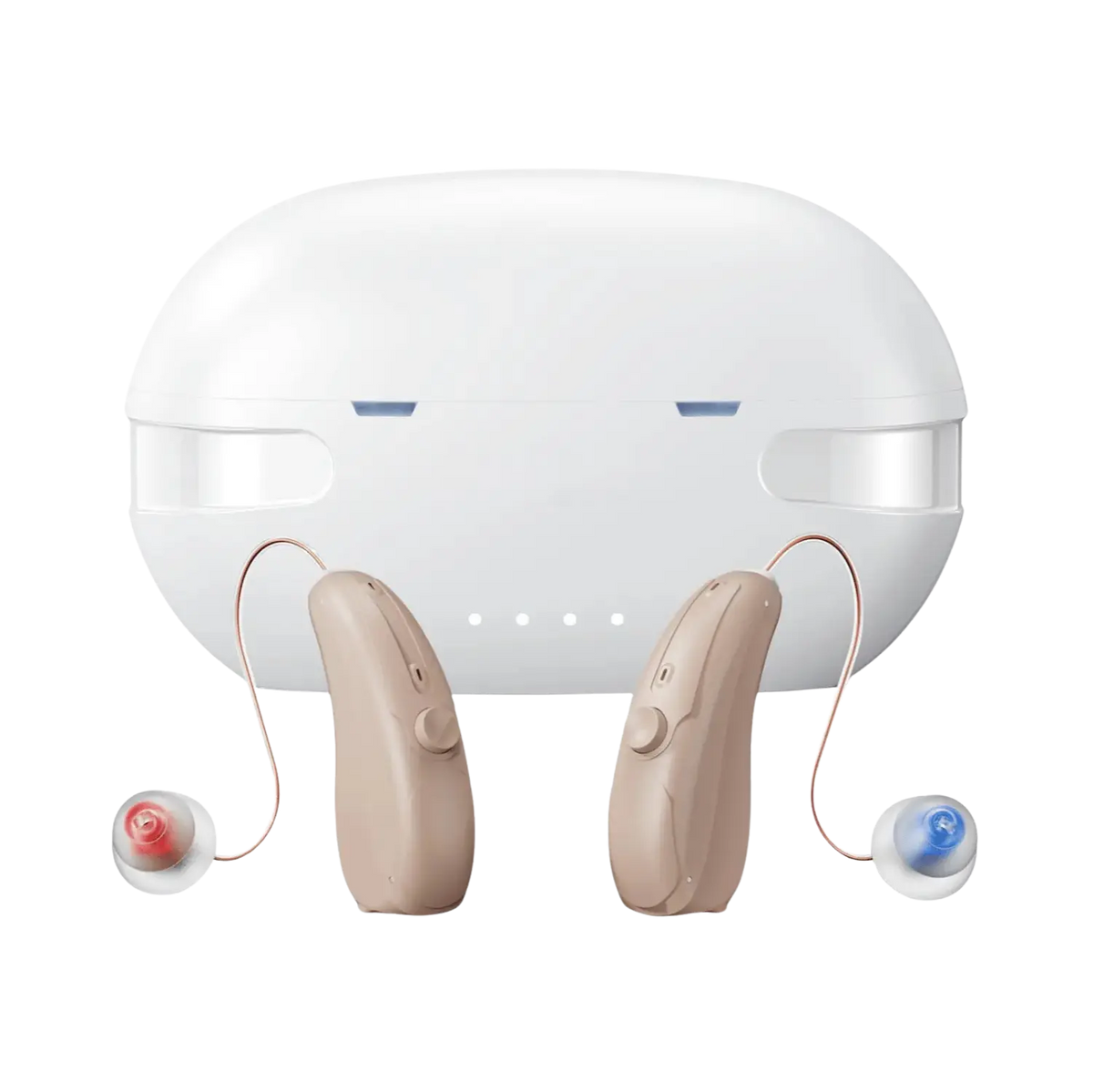
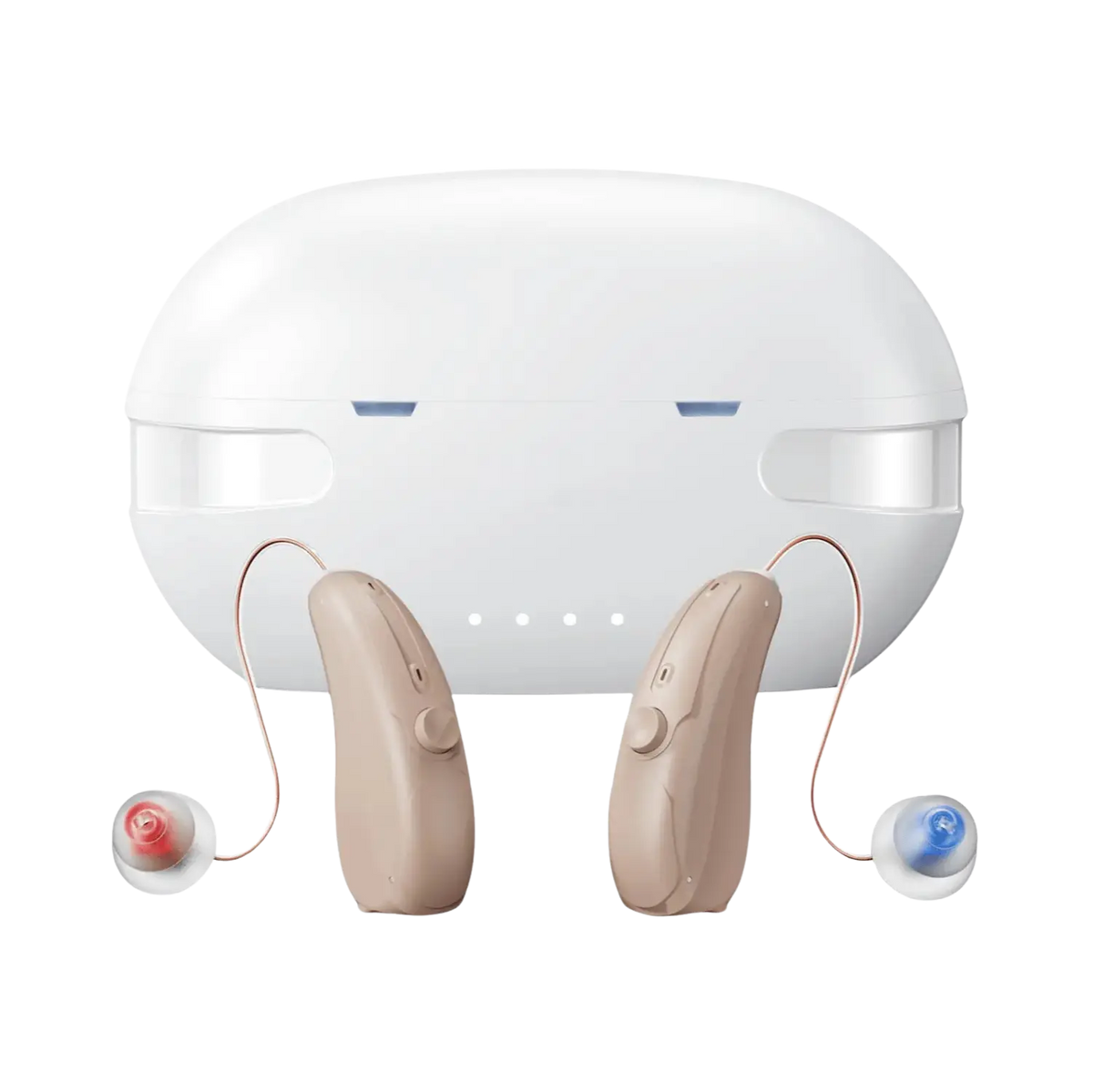
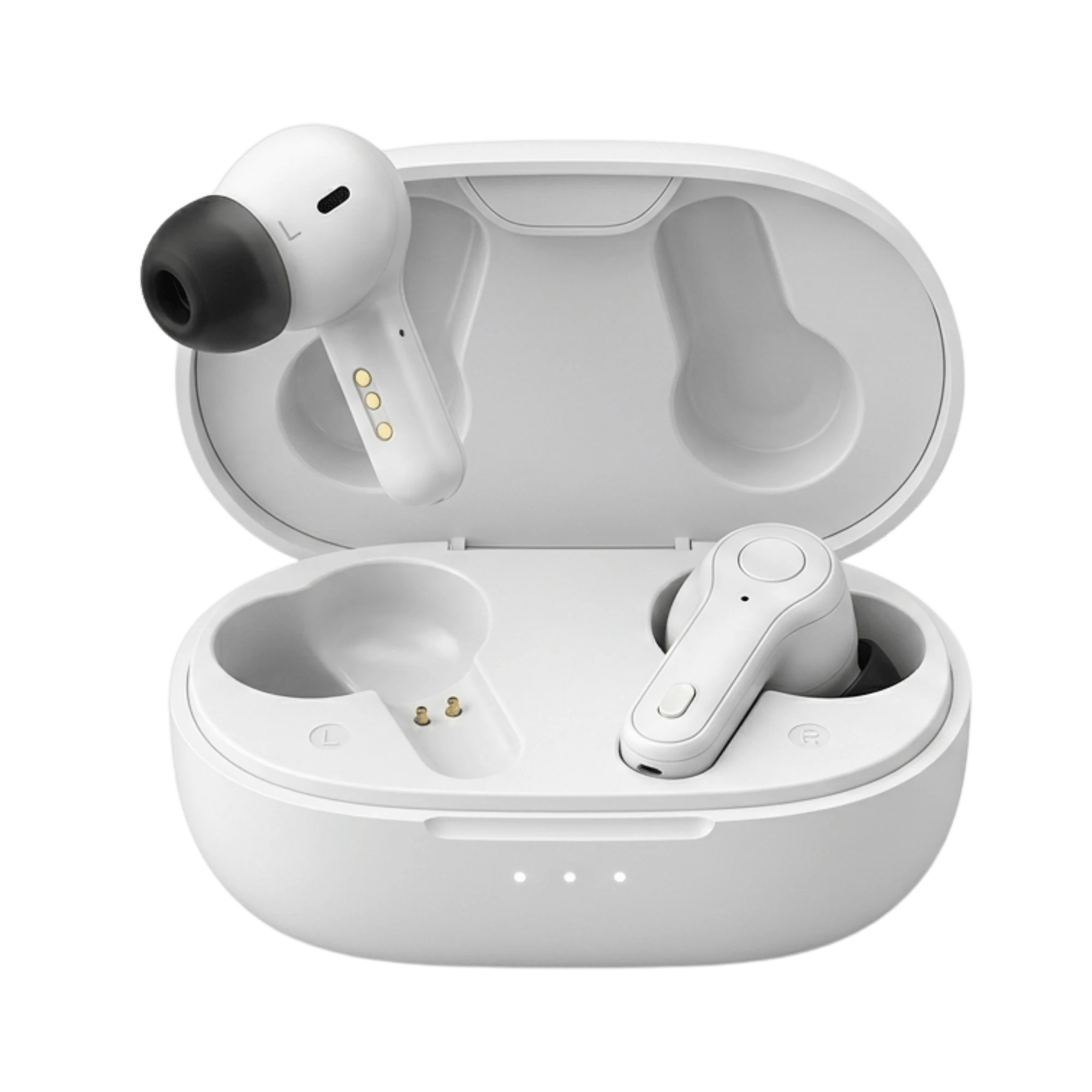
Como esta revisión aborda directamente las barreras de costo y acceso de la atención auditiva tradicional, vale la pena señalar que reducir esas barreras es exactamente el propósito con el que se crearon los audífonos de venta libre que cumplen con las normas de la FDA. Panda Air es un ejemplo de la categoría que estudiaron los investigadores: un audífono de venta libre (OTC) autoajustable con un diseño moderno tipo auricular inalámbrico, procesamiento WDRC de 16 canales y reducción de ruido adaptativa multibanda.
Air funciona desde el primer momento y, para quienes desean un ajuste más personalizado, también ofrece una opción mediante la app: la app de Panda puede realizar una prueba auditiva por frecuencias a través del propio audífono y ajustar la ganancia y la respuesta de frecuencia al perfil auditivo del usuario, lo que lo convierte en uno de los audífonos ajustables desde la app que ponen el proceso de ajuste en manos de quien los usa. La app y la prueba son opcionales, y el dispositivo funciona plenamente sin ellas.
Los detalles prácticos coinciden con lo que esta investigación sugiere que importa para seguir usando un dispositivo día a día: un estuche de carga rápida que ofrece 60 horas de uso total, Bluetooth para llamadas, TV y música, una garantía de 5 años y un período de prueba de 45 días que comienza cuando recibe el producto. Una advertencia que vale la pena repetir de la propia investigación: los dispositivos de venta libre están pensados para la pérdida auditiva leve a moderada, y la pérdida severa o profunda sigue beneficiándose más de una adaptación clínica.
Limitaciones de esta investigación
Los autores califican la certeza de su evidencia como muy baja, y por razones concretas: solo siete ensayos cumplieron los requisitos, la heterogeneidad entre ellos fue considerable (I cuadrado de 89.2 por ciento en el resultado principal), varios presentaban posibles riesgos de sesgo y las estimaciones combinadas fueron imprecisas. Los datos de seguridad de los ensayos fueron demasiado escasos para respaldar conclusiones firmes.
Los hallazgos también se aplican a una población específica: adultos con pérdida auditiva leve a moderada sin complicaciones. No dicen nada sobre niños, pérdida severa o profunda, ni oídos con complicaciones médicas. Los autores describen sus resultados como generadores de hipótesis y piden ensayos más grandes, rigurosos y de largo plazo antes de recomendar una implementación clínica más amplia. No se informaron conflictos de interés.
Dónde nos deja esto
La evidencia hasta ahora sugiere que, para los candidatos adecuados, los audífonos autoajustables pueden estar a la altura de los ajustes profesionales en los resultados que más les importan a quienes los usan. La confianza en esa conclusión sigue siendo baja y a la comunidad científica le queda trabajo por hacer, pero la dirección de la evidencia es alentadora para quienes esperan que un acceso más fácil a la ayuda auditiva no tenga que significar conformarse con menos.
Albazee E, Alismail H, Albannai N, Alenezi YY, Alharran AM, Ibrahim MYH, Aljishi DA, Abu-Zaid A. Self-Fitting Versus Professional-Fitting Hearing Aids: A Systematic Review and Meta-Analysis of Randomized Controlled Trials. Audiology Research. 2026. Retrieved from PubMed. DOI: 10.3390/audiolres16050139