Nogen i dit liv har sikkert fortalt dig, at hvordan et høreapparat ser ud burde være ligegyldigt. De mener det godt, og de tager fejl. Det betyder nok, at folk bruger år på ikke at høre deres børnebørn over det, og forskningen er ikke subtil omkring dette. Anmeldelser af to årtiers undersøgelser viser, at omkring 46 procent af mennesker med høretab ikke bruger et høreapparat, og at omkring 48 procent af mennesker mener, at høreapparater er stigmatiserede, med stigmatiseringen rod i en frygt for at blive set som gamle eller ude af stand.
Så hvis du har skrevet "søde høreapparater" i en søgelinje og følt dig lidt fjollet over det, så lad være. Du stiller spørgsmålet, der faktisk forudsiger, om du vil bære tingen. Denne guide dækker, hvad der får et høreapparat til at se godt ud i 2026, hvilke stilarter der virkelig forsvinder, hvilke farver du virkelig kan få, og hvor Panda® passer.

Hørestøtte, der ligner hverdagen.
Køb Panda® Air - 299 USDAt ville have en, der ser godt ud, er ikke forfængelighed
Forskere deler høreapparatstigma op i to halvdele. Observeret stigma er, hvad andre mennesker ser, og det er næsten udelukkende drevet af design. Opfattet stigmatisering er, hvad du føler, når du går ind i et rum, nogle gange kaldet den overfyldte rumeffekt, og det er drevet af, hvor godt enheden yder. Begge halvdele holder folk ude af høreværn, og en af dem er fikset med industrielt design frem for medicin.
Det samme værk gør en nyttig observation: stigmatisering er målbart lavere blandt yngre generationer, og anmeldere forbinder det med den almindelige tilstedeværelse af trådløse øretelefoner. Ingen tænker to gange, når nogen har en lille hvid enhed i øret nu. AirPods har overhovedet ingen social vægt. Den lektie, forskerne drager, er, at høreapparater gavner, når de låner det visuelle sprog i stedet for sproget i medicinsk udstyr.
Der er et andet fund, der er værd at nævne. Arbejde offentliggjort om tilgængelighedsbarrierer omkring høretab bemærker, at kvinder er mere tilbøjelige til at skjule hørebesvær, delvist under udseendepres, og at kun et sted mellem 16 og 30 procent af mennesker, der kunne have gavn af høreapparater, rent faktisk bruger et. Når en hel kategori af mennesker delvist fravælger, hvordan en enhed læser til fremmede, holder "få det til at se bedre ud" op med at være en overfladisk anmodning og bliver en sundhedsmæssig anmodning.
Hvad der faktisk ser godt ud i 2026
Designretningen på tværs af kategorien i 2026 er konsistent og ret let at opsummere. Enheder bevæger sig ind i øret i stedet for på det. Finisherne er matte snarere end blanke, fordi glans er det, der fanger en fremmeds øje. Paletter er tilbageholdende: hvide, kul og bløde neutrale, der læses som forbrugerteknologi snarere end som en recept.
Det sidste punkt skuffer nogle shoppere, og det er værd at være lige om det. Søgning efter lyserøde høreapparater og farvestrålende høreapparater er almindelige, men det almindelige marked i 2026 har bevæget sig den anden vej. Fed farver findes for det meste i pædiatriske linjer, hvor det er målet at skille sig ud. For voksne har industrien konkluderet, at det mest flatterende høreapparat er det, dit øje glider forbi, og det afspejler paletterne. Hvis du vil have en enhed, som ingen kommenterer, er det neutrale design, der leverer det.
Endnu en ting adskiller enheder, der ser godt ud, fra enheder, der blot fotograferer godt: om noget hænger på ydersiden af dit øre. En krog, et rør og en ledning, der løber over toppen af øret, er det, der gør en enhed øjeblikkelig læsbar som et høreapparat fra den anden side af et bord. Fjern disse tre ting, og det meste af det visuelle problem er væk.
Stilarterne, klassificeret efter hvordan de læser for andre mennesker
| Stil | Hvordan det læser andre | Hvem passer det |
|---|---|---|
| Usynlig ITC / CIC | Effektivt uset på samtaleafstand | Du ønsker, at ingen skal vide det, punktum |
| Earbud-style ITC | Læser som trådløse øretelefoner, der ikke bærer stigmatisering | Du har det fint med at blive set, bare ikke som patient |
| RIC (modtager-i-kanalen) | Synligt hus og ledning over øret | Du prioriterer tilpasningsområde frem for udseende |
| BTE (bag-øret) | Den form, de fleste mennesker forestiller sig som "et høreapparat" | Du har brug for maksimal output frem for alt andet |
To af disse fire stilarter løser udseendeproblemet, og de løser det på forskellige måder. Usynlige enheder i kanalen vinder ved ikke at være der. Enheder i øretelefoner vinder ved at være der og blive mislæst som noget socialt neutralt. Hvilken en der er rigtig afhænger af et spørgsmål, som kun du kan svare på: vil du helst, at ingen ser en enhed, eller vil du hellere, at de ser en og ikke tænker på det?
De farver, du faktisk kan få fra Panda
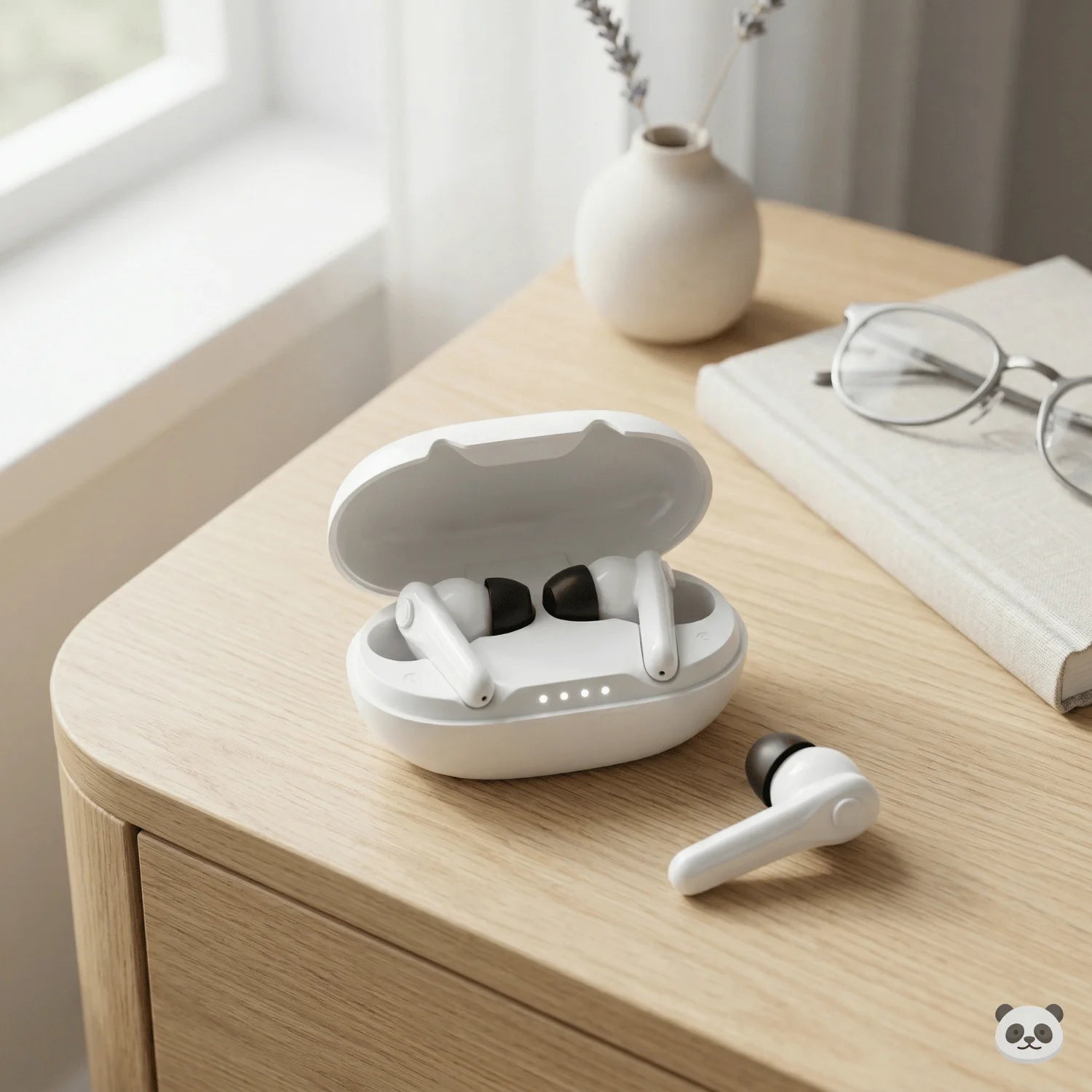
De fleste guider taler om farve i det abstrakte, så her er den konkrete version af Pandas nuværende lineup. Panda® Quantum kommer i beige, sort og sandsølv til $349. Panda® Stealth kommer i hvid og beige til $279. Panda® Air kommer i en enkelt neutral finish til $299, bygget til at læse som en almindelig trådløs øretelefon snarere end som en enhed med en farvehistorie.
En hurtig note om at vælge blandt dem. Beige er den traditionelle hudtone tilgang og fungerer ved at blande. Sort virker ved at forsvinde i skyggen, hvorfor det er et almindeligt valg på dybt siddende usynlige enheder. White læser som forbrugerelektronik, hvilket netop er den forening, der har drænet stigmatiseringen af at have noget i øret. Ingen af disse er mere "korrekte" end andre, og alle tre er tilgængelige på tværs af Panda-serien.
Panda® Air - 299 USD
5-års garanti, 45-dages risikofri prøveperiode, gratis forsendelse. FDA-OTC certificeret.
Se Panda® Air →Panda Air: Øretelefonudseende, høreapparatteknik
Panda® Air blev bygget til præcis den person, denne vejledning er skrevet til. Den er designet til at se ud og føles som moderne trådløse øretelefoner, hvilket er hele pointen: den låner det visuelle sprog, der i forvejen ikke har nogen social vægt. Nogen, der kigger på dig på tværs af et rum, ser, hvad de ser på hvert tog og i hver café. Ingen behøver at vide, at det er et høreapparat.
Tekniken nedenunder er ikke et kompromis for udseendets skyld. Panda Air kører 16-kanals WDRC med multi-band adaptiv støjreduktion over et 200 til 5.000 Hz område, streamer Bluetooth-opkald, tv-lyd og musik direkte gennem enhederne og er fjerlet til mindre end en krone. Dens hurtigopladningsetui leverer i alt 60 timer, så disse er genopladelige høreapparater med et opladningsetui, der holder trit med en hel dag og lidt til. Panda Air er FDA-OTC-certificeret sammen med CE, FCC, ROHS og EMC og har en 5-års garanti med en 45-dages prøveperiode til $299.
Denne kombination er det, der gør det til et af de mere troværdige moderne høreapparater i ørepropper, der fås uden et klinikbesøg. Du bytter ikke klarhed for udseende. Du får begge dele til en pris, der ikke kræver finansiering.
Lavet for livet, ikke kun for at høre.
Prøv Panda® Air - 299 USDEt tilbehør, der rejser med dig
At se godt ud er kun halvdelen af stigma-ligningen. Forskere er på det rene med, at den anden halvdel, følelsen af overfyldt rum, handler om, hvorvidt enheden rent faktisk fungerer, når rummet bliver hårdt. Et høreapparat, der ligner en øretelefon, men lader dig gætte ved middagen, har ikke løst noget.
Det er her Panda Airs klinisk indstillede selvtilpassende 10-minutters online høretest udfører det stille arbejde. Du tager den med derhjemme, den måler de frekvenser, du personligt kæmper med, og den justerer enheden for at rette op på de specifikke huller. Det er frekvensniveaujustering af samme slags, som en audiolog bygger under en fitting, uden klinikbesøg eller tilpasningsgebyr. Som et af de mere tilgængelige selvtilpassende OTC-høreapparater på markedet betyder det, at din Air er indstillet til dine ører frem for et gennemsnit af alles.
Den valgfri ledsagende app tilføjer app-baseret høretilpasning, hvis du vil finjustere yderligere, men enheden fungerer, uanset om du nogensinde åbner den. Det betyder noget, for et høreapparat, der er afhængigt af en telefon, er et høreapparat, der fejler, når telefonen gør det.
Hvis du helst vil, at ingen ser noget overhovedet
Nogle læsere ønsker ikke en enhed, der ser godt ud. De vil ikke have nogen synlig enhed overhovedet, og det er en anden opgave. Til det er Panda® Stealth svaret i rækken: en næsten usynlig enhed i kanalen på 2,3 gram, omtrent en skilling, i hvid eller beige til $279. Den kører 16-kanals digital behandling med 12-bånds smart støjreduktion og tre lyttetilstande, og dens opladningsetui fungerer også som en trådløs fjernbetjening, så du kan justere lydstyrken uden nogensinde at røre dine ører.
Handelen er ligetil. Stealth opgiver Bluetooth-streaming for at forblive så lille, så hvis det er vigtigt at dirigere opkald og tv-lyd gennem dine enheder, passer Air bedre. Hvis det at forsvinde betyder mere end streaming, er det disse usynlige høreapparater at se på.
Dommen. Hvis du vil have et høreapparat, der ligner noget, folk allerede bruger uden kommentarer, Panda® Air på $299 er valget: design i øretelefonstil, 16-kanal WDRC med multi-band adaptiv støjreduktion, Bluetooth til opkald, tv og musik, et etui til hurtig opladning 60 timer i alt, en klinisk afstemt 10-minut selvtilpasningstest, og FDA-OTC certificering understøttet af en 5-års garanti og en 45-dags risikofri prøveperiode. Hvis usynlighed slår alt, Panda® Stealth på $279 gør det job i stedet for. Uanset hvad du vælger en enhed, du faktisk vil bære, hvilket er den eneste specifikation, der nogensinde har tællet.
Almindelige spørgsmål om stil og udseende
Kan jeg få høreapparater i klare farver som pink?
Lyse farver findes for det meste i pædiatriske linjer i 2026, mens voksenmarkedet har sat sig på neutrale farver som hvid, beige, sort og blødt sølv. Pandas lineup følger den retning, med Quantum i Beige, Black og Sandy Silver, og Stealth i White og Beige. Begrundelsen er, at en neutral finish er det, der forhindrer en enhed i at blive bemærket i første omgang.
Vil folk være i stand til at fortælle, at Panda Air er et høreapparat?
Panda Air er designet til at se ud og føles som moderne trådløse øretelefoner, så den på samtaleafstand læser, som enhver trådløs øretelefon gør. Det er bevidst: forskning i høreapparatstigma peger på det sædvanlige ved øretelefoner som årsagen til, at yngre brugere føler sig mindre selvbevidste, og Air er bygget til at sidde inde i den sammenhæng.
Opgiver jeg lydkvaliteten ved at vælge et bedre udseende høreapparat?
Ikke med Panda Air. Den kører 16-kanals WDRC med multi-band adaptiv støjreduktion og en klinisk tunet 10-minutters selvtilpasningstest, så enheden er tilpasset din specifikke høreprofil frem for en generisk forudindstilling. Du får hverdagslooket og klarheden for $299.
Bundlinjen for stilbevidste købere
Grunden til, at "søde høreapparater" er værd at søge, er, at udseendet ikke er et sideproblem i høreplejen, det er porten. Næsten halvdelen af mennesker med høretab går uden en enhed, og omkring halvdelen af mennesker mener, at høreapparater har et stigmatisering, der er forbundet med at se gamle ud. Et høreapparat, du efterlader i en skuffe, korrigerer intet, uanset hvor godt dets kanaltal er. Panda® Air koster $299, ligner de øretelefoner, alle allerede har på, og leverer 16-kanals behandling med en 10-minutters selvtilpasningstest og en 5-års garanti bag sig.
Det er derfor Panda Air er det bedste høreapparat til alle, der ønsker støtte uden stigmatisering. Hvis du har udskudt dette på grund af, hvordan det ville se ud, så prøv en høreapparat i øresnegl i dag til $299. Du får 45 dage risikofrit, og hvis det ikke er den opgradering, du håbede på, så send den tilbage til fuld refusion uden spørgsmål.