Omformning af globale markeder skar indkøbspriserne på høreapparater med 84 procent, viser review
Et nyt scoping review og et UNICEF-casestudie rapporterer, at målrettet markedsformning har sænket priserne på høreapparater dramatisk, og understreger, at omkostninger er en af de største barrierer, der holder hjælpemidler uden for rækkevidde på verdensplan.
Hjælpemidler som høreapparater, kørestole og briller kan forandre liv, men for de fleste af dem, der har brug for dem, er selv helt basale apparater stadig uden for rækkevidde. Forskere ved University College London har undersøgt et af de mest lovende politiske værktøjer til at ændre det: markedsformning, altså store institutioners bevidste indsats for at reparere dysfunktionelle markeder, så produkter bliver tilgængelige og overkommelige.
Deres resultater, offentliggjort i Frontiers in Rehabilitation Sciences, rummer et slående datapunkt for høreverdenen: Tidlige indkøbstal fra UNICEF's arbejde med markedsformning viser en gennemsnitlig prisreduktion på 84 procent for høreapparater i udvalgte lande.
Titel: Market shaping for AT: scoping review and case study of an intervention
Forfattere: Ellie Cole, Victoria Austin
Tilknytning: Global Disability Innovation Hub, University College London, London, Storbritannien
Tidsskrift: Frontiers in Rehabilitation Sciences, bind 7, udgivet 4. september 2026
Undersøgelsestype: Scoping review med kvalitativt casestudie
Reference: PubMed-oversigt, DOI: 10.3389/fresc.2026.1918680
Baggrund: Hvorfor forskerne undersøgte emnet
Problemets omfang er enormt. Behovet for hjælpemidler forventes at nå 3,5 milliarder mennesker i 2050, men adgangen ligger i dag på kun omkring 10 procent. Høreapparater er et oplagt eksempel: Høretab er blandt de mest udbredte handicap i verden, men traditionelle apparater har historisk været dyre, distribueret gennem fragmenterede kanaler og simpelthen utilgængelige mange steder.
Markedsformning vil sige at bruge store aktørers købekraft, data og koordineringsevne til at rette op på markedsfejl, for eksempel ved at samle efterspørgslen på tværs af lande, forhandle med leverandører og skabe forudsigelige volumener, som gør det muligt for producenterne at sænke priserne. Det har siden 2018 været fremhævet som et centralt redskab for hjælpemidler, men evidensen for, hvordan det reelt er forløbet, har været spredt.
Forfatterne ville kortlægge evidensen systematisk og gennem et detaljeret casestudie undersøge, hvordan UNICEF, en af verdens største indkøbsorganisationer, har omsat markedsformning til praksis.
Sådan blev undersøgelsen gennemført
Forskningen kombinerede to metoder. Først gennemgik et scoping review litteraturen om markedsformning for hjælpemidler og inkluderede til sidst 15 publikationer, hvorfra der blev udtrukket fælles temaer.
Dernæst gennemførte forfatterne et casestudie af UNICEF's arbejde med markedsformning baseret på otte interview med personer, der havde været involveret i at udforme og implementere strategien, suppleret med tidlige indkøbsdata, som UNICEF stillede til rådighed for udvalgte lande.
Fire temaer trådte frem af reviewet: behovet for systemtænkning, problemet med ikke-integreret innovation, spørgsmål om styring og finansiering samt vedvarende datamangler i forståelsen af markederne for hjælpemidler.
Hvad forskerne fandt
Det vigtigste resultat for høreomsorgen er prisdataene. Tidlige tal fra UNICEF's indkøbsarbejde viste en gennemsnitlig prisreduktion på 84 procent for høreapparater i de undersøgte lande. Kørestole oplevede en gennemsnitlig reduktion på 34 procent, et tal, som ifølge forfatterne blev trukket ned af ét lands afvigende resultat på 5 procent.
Evidensen tyder på, at UNICEF's markedsformning hidtil har haft en gennemgribende effekt. Når en stor, betroet køber samler efterspørgslen og forhandler systematisk, kan priser, der engang virkede faste, falde dramatisk.
Samtidig fandt reviewet gentagne diskussioner om siloopdelt tænkning. Flere publikationer argumenterede for, at markederne for hjælpemidler formes af flerdimensionelle, indbyrdes afhængige faktorer, og at isolerede indsatser ikke er nok. Flere introducerede "missionstænkning", hvor mange aktører organiseres omkring et fælles mål, som et supplerende perspektiv.
Udfordringer i sektoren består, herunder finansiering og logistik. Forfatterne konkluderer, at markedsformning rummer et betydeligt potentiale, men at den største effekt kræver sammenhængende, modig styring, hvor markedsformning ses som ét værktøj inden for en bredere mission om at udvide adgangen.
Hvad det betyder for mennesker med høretab
Tallet på 84 procent er mere end en indkøbsstatistik. Det er et bevis på, at høreapparaters historisk høje pris ikke er en uforanderlig kendsgerning ved teknologien, men i høj grad et produkt af, hvordan markedet har været struktureret. Når indkøb organiseres anderledes, kan den samme type apparat koste en brøkdel af det, køberne tidligere betalte.
For den enkelte har udviklingens retning betydning. Mellem internationale markedsformende tiltag og lovændringer, der har åbnet detailkanaler i nogle lande, er tiden, hvor hørehjælp var låst bag prisskilte på flere tusind dollar, ved at forsvinde. Omkostninger er stadig en af de mest nævnte grunde til, at folk udskyder at tage fat på deres høretab, og hver kraft, der presser priserne ned, nager i den barriere.
Studiet understreger også, at pris kun er én del af billedet. Distribution, opfølgende støtte og pålidelig information har alle betydning for, om et høreapparat faktisk når et øre og bliver brugt, og derfor argumenterer forfatterne for tilgange på systemniveau frem for enkeltstående løsninger.
Lavere omkostningsbarriere tættere på hjemmet
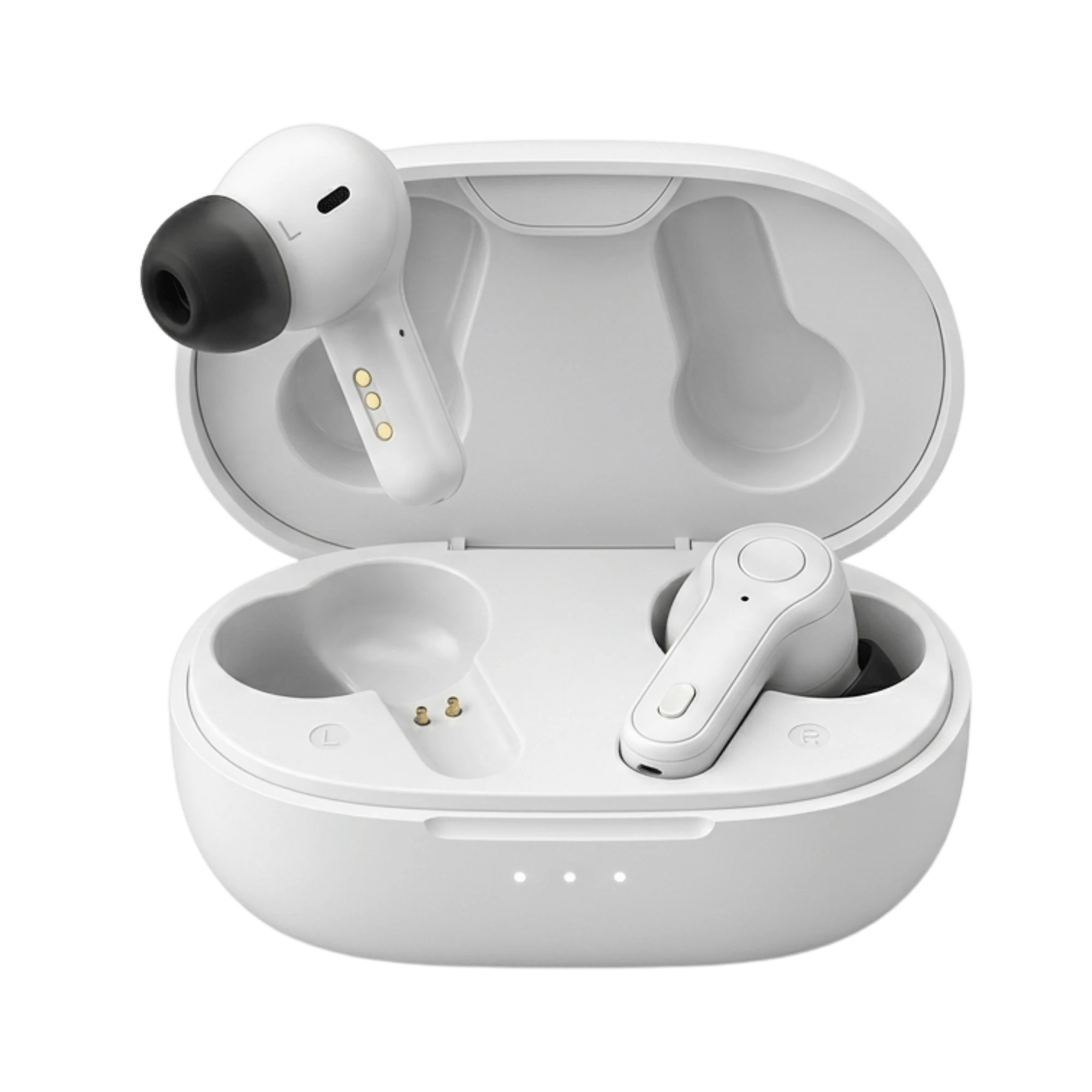
Da dette studie fremhæver omkostninger som en central barriere for høreomsorg, er det værd at bemærke, at nyere FDA-OTC-høreapparater blev skabt for at sænke den barriere på forbrugermarkederne. Panda Air er et eksempel på dette skifte: et moderne høreapparat i øretelefonstil, solgt direkte til forbrugerne og udviklet som et selvtilpassende OTC-høreapparat med 16-kanals WDRC-behandling og flerbånds adaptiv støjreduktion.
Air fungerer direkte ud af æsken, og en valgfri app kan køre en frekvensspecifik høretest i øret og tilpasse forstærkning og frekvensrespons til brugerens høreprofil for dem, der ønsker app-styret finjustering. Det er et genopladeligt høreapparat med et opladningsetui, der giver 60 timers samlet brug, Bluetooth til opkald, tv og musik, 5 års garanti og en 45 dages prøveperiode, der begynder, når produktet er modtaget.
OTC-kategorien er godkendt til voksne med let til moderat høretab. Personer med svært eller dybt høretab har stadig størst gavn af klinisk tilpasning, og lavere priser i både detail- og institutionelle kanaler gør det lettere for alle at få hjælp tidligere.
Begrænsninger ved denne forskning
Scoping reviewet byggede på blot 15 publikationer, hvilket afspejler, hvor ung evidensbasen er, og casestudiet var centreret om en enkelt organisation med indsigt fra otte interview. Prisdataene for indkøb var tidlige tal fra udvalgte lande, leveret af UNICEF selv, og ikke uafhængigt reviderede markedsdækkende statistikker, så reduktionen på 84 procent bør læses som et lovende signal og ikke som en fastslået global norm. Abstractet oplyser ikke om specifikke finansieringskilder eller interessekonflikter.
Hvor efterlader det os
Denne forskning giver sjælden, konkret evidens for, at høreapparaters priser reagerer på målrettet handling, uanset om den kommer fra en global indkøbsorganisation, der omformer institutionelle markeder, eller fra regulatoriske og detailmæssige skift, der omformer forbrugermarkeder. Med milliarder, der forventes at få brug for hjælpemidler i midten af århundredet, er studiets budskab, at overkommelige priser er et løsbart problem, og at de organisationer, der er villige til at styre disse markeder sammenhængende, vil afgøre, hvor hurtigt det bliver løst.
Cole E, Austin V. Market shaping for AT: scoping review and case study of an intervention. Frontiers in Rehabilitation Sciences. 2026;7:1918680. Retrieved from PubMed. https://doi.org/10.3389/fresc.2026.1918680