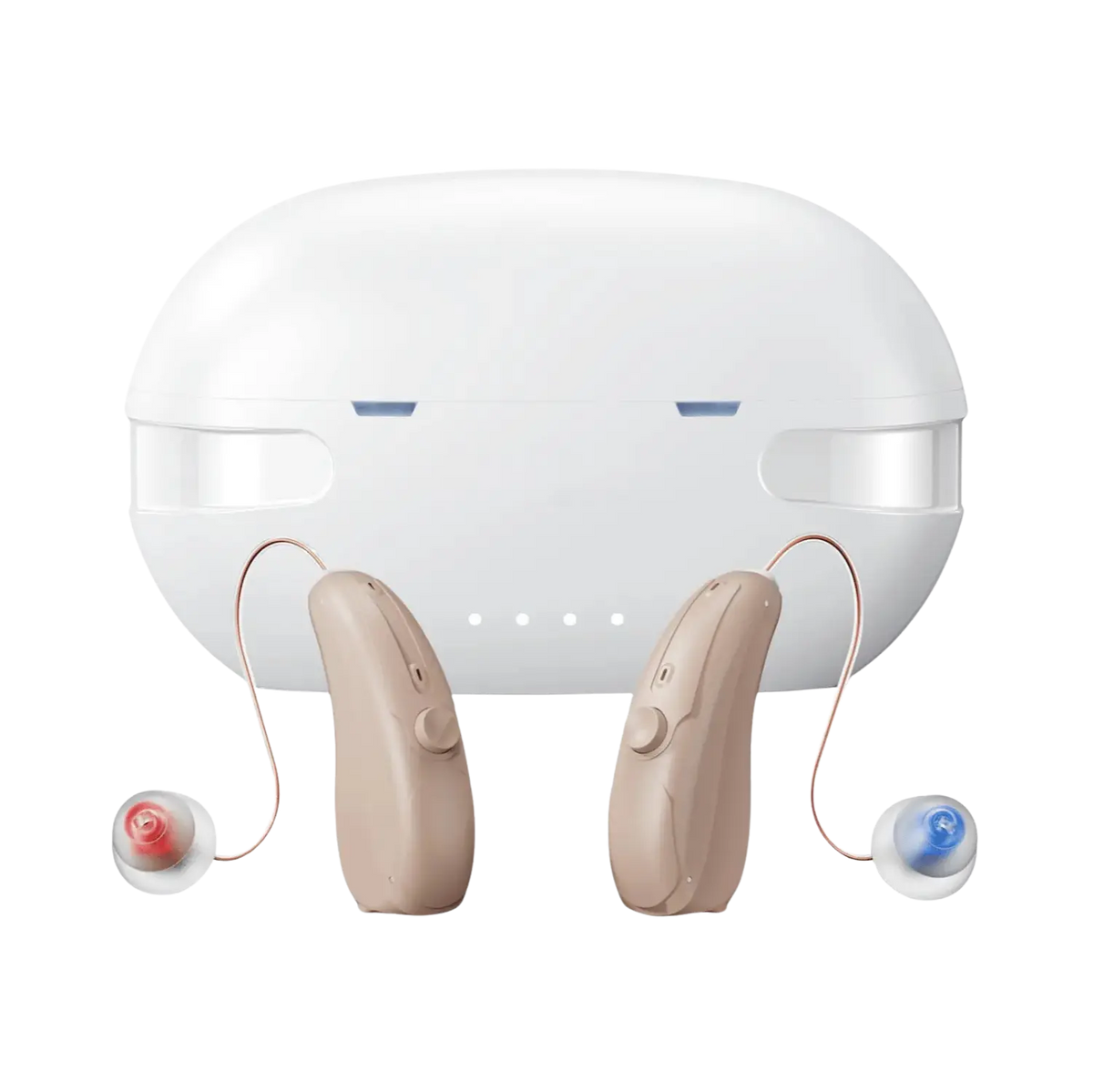
How Severe Hearing Loss Affects Work Productivity: New Cohort Study
Working-age adults with severe hearing loss in both ears reported lower productivity and a greater need to recover after work in a new Belgian cohort study.
Hearing loss is usually discussed as a condition of retirement age, but a large share of people living with it are still in the workforce. For them, every meeting, phone call, and noisy open-plan office is a listening task layered on top of the job itself. Researchers have long suspected that this extra load shows up somewhere: in output, in exhaustion, or in sick leave.
A research group at the University of Antwerp and Antwerp University Hospital has now measured that load directly. Their new study followed working-age adults with severe hearing loss in both ears and asked a blunt question: how much does the condition cost people at work, in productivity and in the energy left over at the end of the day?
About This Study
Title: Work Productivity Loss and Increased Recovery Needs in Working-Age Adults With Bilateral Severe Hearing Loss: Evidence From a Prospective Cohort Study
Authors: Cato Philips, Laure Jacquemin, Marc J. W. Lammers, Griet Mertens, Annick Gilles, Olivier M. Vanderveken, Vincent Van Rompaey
Affiliations: Resonant Labs Antwerp, University of Antwerp; Department of Otorhinolaryngology, Head and Neck Surgery, Antwerp University Hospital; University College Ghent, Belgium
Journal: Ear and Hearing, published online October 15, 2026
Study type: Prospective observational cohort study
PubMed DOI: 10.1097/AUD.0000000000001895
Background: Why the Researchers Looked at This
Severe bilateral hearing loss means a substantial loss of hearing in both ears. In this study it was defined as an average hearing loss of at least 70 decibels in the worse ear, a level at which ordinary conversation is inaudible without technology. People in this range typically rely on powerful hearing devices or cochlear implants, and communication still demands sustained concentration.
The research team noted that the workplace impact of this condition had never been fully explored. Their hypothesis was that the daily communication difficulties would translate into measurable productivity loss and, through sustained listening effort, into fatigue. They also measured a concept from occupational health research called need for recovery: how much time and rest a person requires to recuperate after a working day.
Because thinking skills can influence job performance independently of hearing, the team additionally tested cognitive functioning, using assessments adapted for people with hearing loss, to check whether any productivity effects might really be driven by cognition rather than hearing.
How the Study Was Done
The researchers enrolled 50 adults aged 18 to 65 who had been diagnosed with severe acquired bilateral hearing loss. Each participant completed a battery of validated occupational questionnaires: the Work Limitations Questionnaire, the Work Productivity and Activity Impairment Questionnaire, the need for recovery scale from a standard Dutch questionnaire on the experience of work, and the Quickscan questionnaire, which gauges the risk of long-term sick leave.
Alongside the questionnaires, everyone received a full audiometric assessment, including pure-tone audiometry and speech perception testing in both quiet and noise. Cognitive functioning was measured with the Repeatable Battery for the Assessment of Neuropsychological Status in a version adjusted for hearing-impaired individuals, plus a visuospatial short-term memory task. Results were compared against healthy controls and general population values reported in earlier studies.
What the Researchers Found
Participants with severe bilateral hearing loss reported a clear decline in work productivity. Their rates of productivity loss were higher than those reported by healthy controls and by the general population in earlier research using the same instruments.
The fatigue side of the picture was just as striking. Participants reported a significantly greater need for recovery after work than normal-hearing controls in previous studies, consistent with the idea that effortful listening all day drains energy that would otherwise be available for life outside the job.
Within the group, participants who also experienced tinnitus appeared to fare worse still, reporting even greater productivity loss and a higher need for recovery than those without tinnitus. This suggests the two conditions compound each other in the workplace.
Notably, the impact of hearing loss on measured cognitive functioning was limited. The productivity and fatigue effects did not appear to be explained by differences in thinking skills, pointing back to hearing and communication effort as the active ingredient.
What It Means for People with Hearing Loss
This study puts numbers behind something many workers with hearing loss already know: the job costs them more than it costs their colleagues. The finding that recovery needs are elevated is especially important, because exhaustion after work is often invisible to employers and even to families, yet it shapes careers, relationships, and wellbeing.
The authors call for multidisciplinary strategies to support employability, which can include hearing technology, workplace accommodations such as quieter meeting setups and captioning, and honest conversations about communication needs. For the millions of working adults with milder hearing loss, the study is also a reminder that hearing difficulty at work is a legitimate health issue, not a personal failing, and that addressing it early is a form of career protection.
The Workplace Cost of Hearing Loss and the Case for Acting Earlier
The participants in this study had severe loss, which belongs in the hands of clinical audiology. But hearing loss rarely starts severe. It usually develops gradually, and the years spent straining through meetings with untreated mild-to-moderate loss carry their own workplace cost. Because this study highlights how expensive untreated hearing becomes, it strengthens the case for acting while loss is still mild-to-moderate, the range FDA-OTC hearing aids are approved for and designed to make affordable.
Panda Air is one example: a modern earbud-style hearing aid with 16-channel processing and multi-band adaptive noise reduction, Bluetooth streaming for calls, TV, and music, and a fast-charge case providing 60 hours of total use, a practical fit for long working days. It comes with a 5-year warranty and a 45-day trial that begins when you receive it.
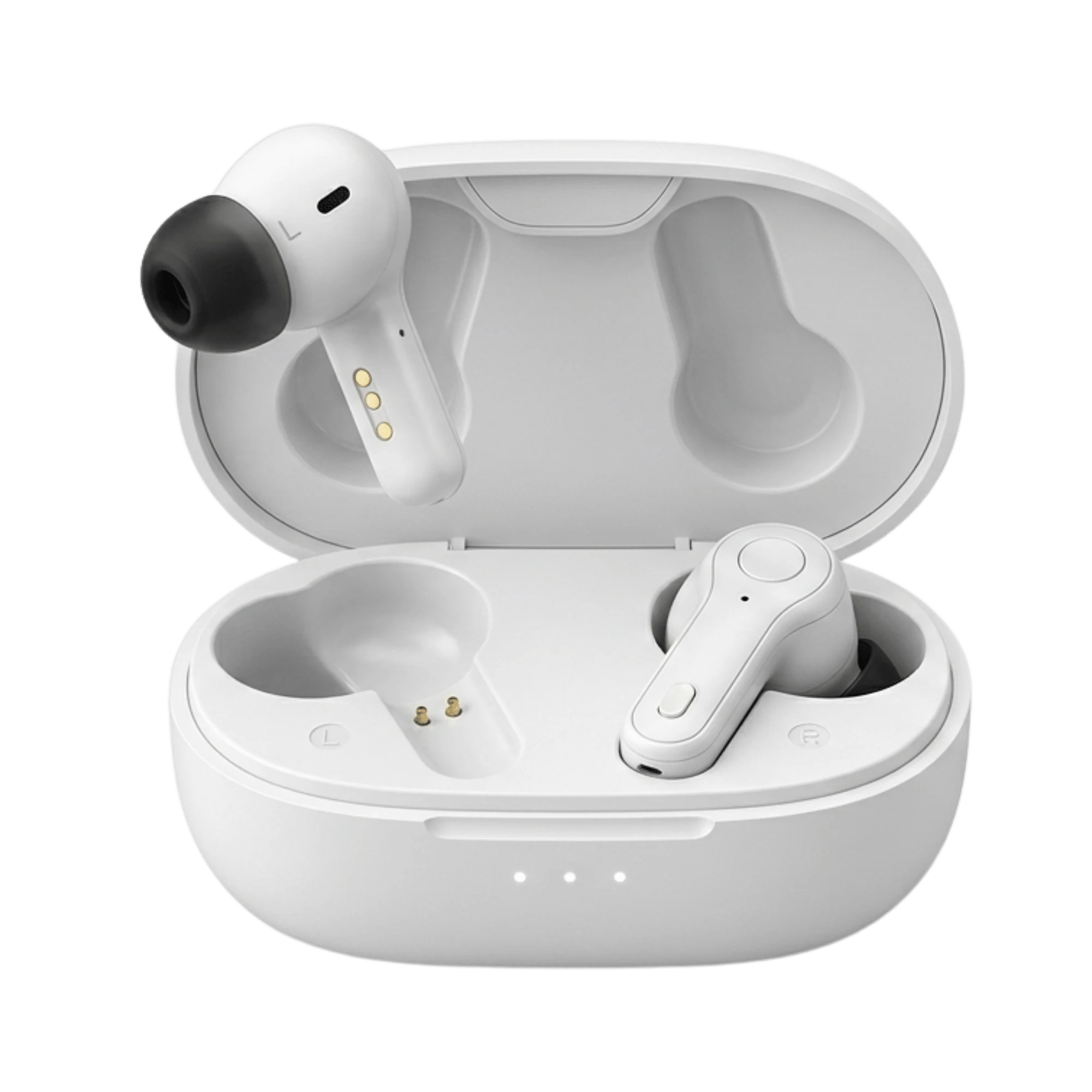
Air also works as a self-fitting OTC hearing aid through an optional companion app: an in-ear hearing test run through the aid itself can personalize gain and frequency response to your hearing profile. The app and test are optional, and Air works out of the box without them. As this study underlines, OTC devices are approved for mild-to-moderate hearing loss; severe or profound loss, like that of the participants here, still benefits most from clinical fittings.
Limitations of This Research
The cohort was small, at 50 participants, and productivity was self-reported rather than measured from employment records. Comparisons were made against control values from earlier studies rather than a concurrent matched control group, which weakens direct comparisons. The authors also note the need for objective, hearing-specific productivity measures. The work was supported in part by a research grant from Cochlear Benelux, a hearing implant company, which is disclosed in the publication.
What to Do With This
If you are working with hearing loss, this research validates taking it seriously as an occupational issue: the fatigue is real, the productivity drag is measurable, and support exists, from hearing technology to workplace accommodations. If your hearing is only starting to slip, the study is an argument against waiting. The cost of untreated hearing loss is not paid all at once; it is paid every workday, and it compounds.
Philips C, Jacquemin L, Lammers MJW, Mertens G, Gilles A, Vanderveken OM, Van Rompaey V. Work Productivity Loss and Increased Recovery Needs in Working-Age Adults With Bilateral Severe Hearing Loss: Evidence From a Prospective Cohort Study. Ear and Hearing. 2026. Retrieved from PubMed. https://doi.org/10.1097/AUD.0000000000001895