Staidéar a Nascann Stair COVID-19 le Tairseacha Éisteachta Níos Measa
Fuair staidéar Brasaíleach ar 240 duine fásta go raibh tairseacha éisteachta níos airde ag daoine a raibh stair dheimhnithe COVID-19 acu, agus níos mó ná a dhá oiread an seans go mbeadh athruithe intomhaiste éisteachta orthu, i gcomparáid le daoine eile nár nochtadh don víreas.
Ó bhlianta tosaigh na paindéime, tá taighdeoirí ag cur síos ar na bealaí inar féidir le COVID-19 fanacht sa chorp, ó thuirse agus ceo inchinne go hathruithe ar bholadh agus ar bhlas. Is ceist oscailte í fós an bhfágann an víreas lorg ar an éisteacht freisin, agus staidéir ag díriú i dtreonna éagsúla agus go leor acu ag brath ar fhéintuairisciú seachas ar thástáil fhoirmiúil éisteachtmhéadrach.
Glacann staidéar trasghearrthach nua ón mBrasaíl, a foilsíodh in International Archives of Otorhinolaryngology, an bealach is déine. Thomhais taighdeoirí tairseacha éisteachta íontonacha i 120 duine a raibh stair dheimhnithe COVID-19 acu agus i 120 duine nach raibh, agus ansin rinne siad comparáid idir an dá ghrúpa cluas ar chluas.
Faoin Staidéar Seo
Teideal: Audiometric Profile in Post-COVID-19 Patients
Údair: Mathias Antonialli Castoldi agus Fernando de Andrade Quintanilha Ribeiro
Cleamhnachtaí: Roinn na hOtairínealaringeolaíochta, Faculdade de Ciências Médicas da Santa Casa de São Paulo, São Paulo, an Bhrasaíl
Iris: International Archives of Otorhinolaryngology, foilsithe an 14 Lúnasa 2026
Cineál staidéir: Staidéar comparáideach trasghearrthach (120 duine fásta a nochtadh i gcomparáid le 120 nár nochtadh)
DOI PubMed: 10.1055/a-2873-4569
Cúlra: Cén Fáth ar Scrúdaigh na Taighdeoirí Seo
Is fada aitheanta ionfhabhtuithe víreasacha mar chúis fhéideartha le damáiste éisteachta. Is féidir leis an mbruitíneach, leis an leicneach agus le citimeigilivíreas an chluas inmheánach a ghortú, mar sin ba nádúrtha do chloseolaithe fiafraí go luath an bhféadfadh SARS-CoV-2 an rud céanna a dhéanamh, bíodh sé trí éifeachtaí díreacha ar an gcluas, trí athlasadh, nó trí athruithe ar an soláthar fola do struchtúir íogaire an choiléir.
Bhí an fhianaise go dtí seo measctha, agus déanann na húdair cur síos ar éiginnteacht dháiríre maidir le cibé an fachtóir riosca é COVID-19 do chaillteanas éisteachta. Bhí go leor tuairiscí roimhe seo beag, gan ghrúpaí rialaithe, nó ag brath ar othair na siomptóim a thabhairt faoi deara iad féin, rud nach bhfuil iontaofa toisc gur minic nach dtugtar athruithe éisteachta de réir a chéile nó athruithe ar mhinicíochtaí arda faoi deara sa saol laethúil.
Ceapadh an staidéar seo chun aghaidh a thabhairt ar na laigí sin le héisteachtmhéadracht fhoirmiúil íontonach, an tástáil chliniciúil chaighdeánach ina bhfreagraíonn éisteoirí do thoin laga ar airde éagsúla, i ngrúpa measartha mór de dhaoine fásta a nochtadh agus nár nochtadh.
Conas a Rinneadh an Staidéar
Rinne na taighdeoirí measúnú ar 240 duine fásta idir 2021 agus 2023. Bhí stair dheimhnithe ionfhabhtaithe COVID-19 ag leath acu; ní raibh aon nochtadh aitheanta ag an leath eile. Rinneadh éisteachtmhéadracht íontonach ar gach rannpháirtí, agus rinneadh comparáid idir na grúpaí, don dá chluas, ar na tairseacha éisteachta a fuarthas, is é sin na fuaimeanna is ciúine is féidir le duine a bhrath go hiontaofa ag gach minicíocht.
Thuairiscigh rannpháirtithe sa ghrúpa a nochtadh freisin cé na siomptóim cluaise, sróine agus scornaí a bhí orthu le linn a dtinnis. Chuir sé sin ar chumas na foirne a thástáil an raibh baint ag aon siomptóm ar leith le linn an ionfhabhtaithe le hathruithe intomhaiste ar an tástáil éisteachta ina dhiaidh sin.
Cad a Fuair na Taighdeoirí
Den chuid is mó, bhí tairseacha tonacha airmheánacha níos airde ag an ngrúpa a raibh stair COVID-19 acu ná ag an ngrúpa nár nochtadh, sa dá chluas, rud a chiallaíonn go raibh orthu fuaimeanna a bheith níos airde sula bhféadfaidís iad a chloisteáil. Aimsíodh tairseacha éisteachta athraithe i 28.3% de na daoine a nochtadh i gcomparáid le 15% díobh siúd nár nochtadh, rud is ionann agus cóimheas corrlaigh de 2.24 (eatramh muiníne 95%: 1.18 go 4.25).
Nuair a cuireadh cluas dheas agus cluas chlé gach duine i gcomparáid le chéile, tháinig patrún eile chun solais: ba mhinic an lagú éisteachta sa ghrúpa a nochtadh neamhshiméadrach, é ag dul i bhfeidhm ar chluas amháin níos mó ná an ceann eile.
I measc na siomptóm a tuairiscíodh le linn an tinnis, ba iad gearáin sróine (67.5%), casacht (65.8%) agus cailliúint bolaidh (60%) ba choitianta. Ní raibh siomptóim a bhaineann leis an éisteacht chomh minic sin: thuairiscigh 19.2% tinnítas, 18.3% pian cluaise, agus 18.3% caillteanas éisteachta. Rud tábhachtach: níor bhain ach dhá shiomptóm go staitistiúil le hathruithe intomhaiste tairsí: caillteanas éisteachta féintuairiscithe (cóimheas corrlaigh 8.9) agus tinnítas (cóimheas corrlaigh 3.7).
Tabhair faoi deara an bhearna sna figiúirí sin. Cé go raibh athruithe intomhaiste éisteachta ar 28.3% de na rannpháirtithe a nochtadh, níor thuairiscigh ach 18.3% caillteanas éisteachta mar shiomptóm. Bhí athruithe éisteachtmhéadracha ar roinnt daoine nár thug siad faoi deara, de réir dealraimh, nó nár cheangail siad leis an tinneas.
Cad is Brí Leis do Dhaoine a bhfuil Caillteanas Éisteachta Orthu
Don iliomad daoine fásta a raibh COVID-19 orthu, ní cúis imní an staidéar seo: bhí gnáth-thairseacha ag formhór na rannpháirtithe a nochtadh. Ach neartaíonn sé an cás go bhfuil baint ag an ionfhabhtú le héisteacht níos measa ar thástáil fhoirmiúil, agus gur comhartha tábhachtach é tinnítas nó deacracht éisteachta a thabhairt faoi deara le linn an tinnis nó ina dhiaidh, ar fiú gníomhú air seachas neamhaird a dhéanamh de.
Baineann an ceacht níos leithne le brath. Is minic nach dtugtar athruithe éisteachta faoi deara, is cuma cén chúis atá leo, toisc go dtagann siad de réir a chéile nó go dtéann siad i bhfeidhm ar chluas amháin nó ar airde áirithe níos mó ná a chéile. Is é seiceáil fhoirmiúil éisteachta an t-aon bhealach iontaofa le fios a bheith agat cá seasann tú, go háirithe tar éis tinnis shuntasaigh.
Nuair a Shleamhnaíonn Athruithe Éisteachta Thart Gan Aird
Ceann de na torthaí is ciúine anseo ná gur mhó líon na n-athruithe intomhaiste éisteachta ná líon na ndaoine a thuairiscigh caillteanas éisteachta i ndáiríre. Is téama athfhillteach i dtaighde éisteachta í an bhearna sin idir a mbraitheann éisteachtmhéadracht agus a dtugann daoine faoi deara, agus is cúis amháin í go bhfanann go leor daoine fásta blianta sula dtugann siad aghaidh ar chaillteanas éisteachta éadrom go measartha.
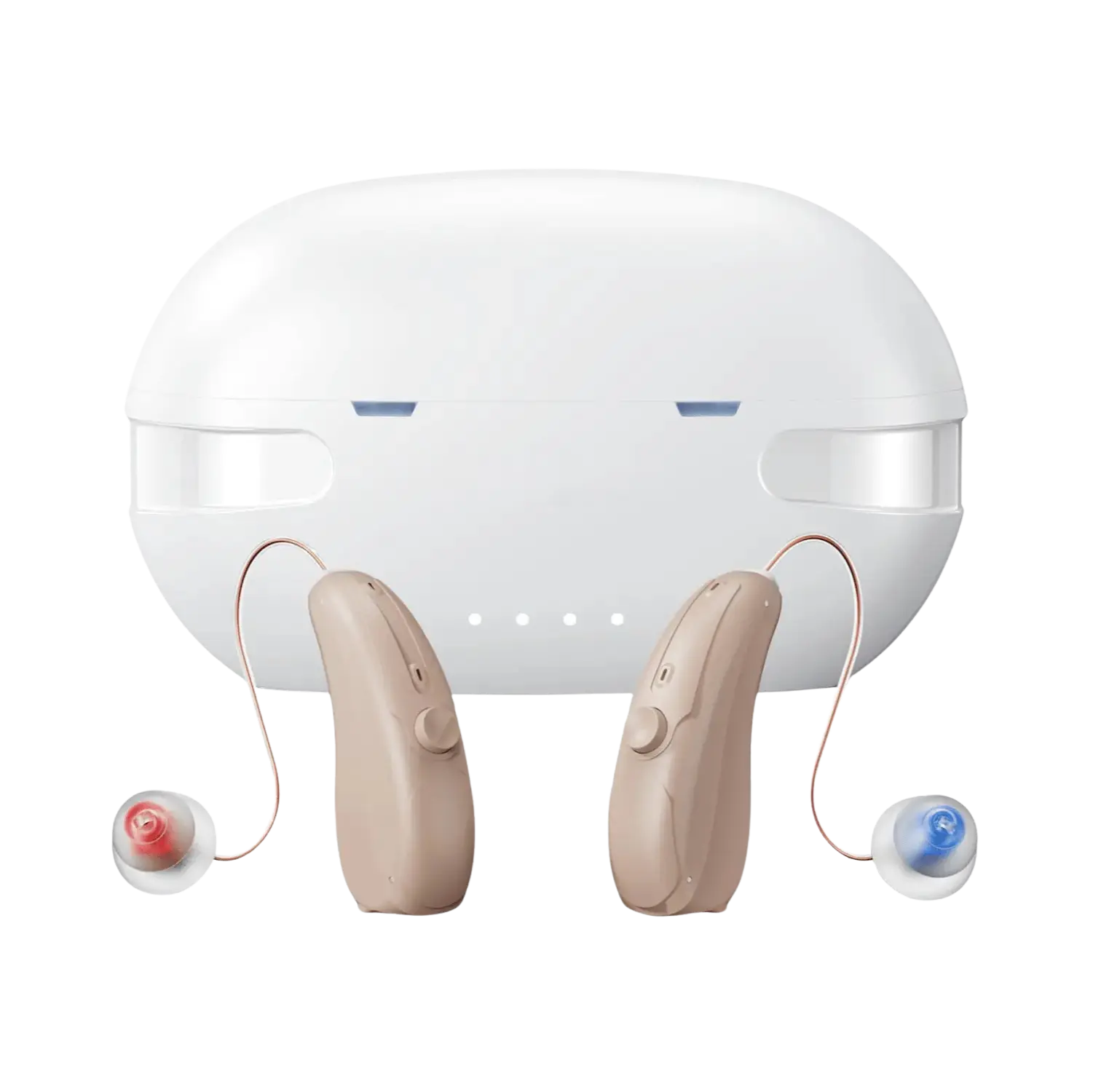
Tá áiseanna éisteachta nua FDA-OTC deartha chun na bacainní, ó thaobh costais agus áise de, a choinníonn daoine ó ghníomhú ar na hathruithe sin a laghdú. Gléas den sórt sin is ea Panda Air: áis éisteachta nua-aimseartha i stíl cluasáin le próiseáil 16 chainéal, laghdú oiriúnaitheach torainn ilbhanda, cás mearluchtaithe a thugann 60 uair an chloig úsáide san iomlán, agus Bluetooth le haghaidh glaonna, teilifíse agus ceoil. Mar áis éisteachta OTC féinfheistithe, cuireann sé tástáil éisteachta roghnach san aip ar fáil, a dhéantar sa chluas, a thomhaiseann do fhreagairtí thar mhinicíochtaí éagsúla tríd an áis féin agus a phearsantaíonn an neartú agus an fhreagairt minicíochta de réir do phróifíl éisteachta. Tá an aip agus an tástáil go hiomlán roghnach, agus oibríonn Air díreach as an mbosca gan iad.
Tagann Air le baránta 5 bliana agus tréimhse trialach 45 lá a thosaíonn nuair a shroicheann an táirge thú. Pointe amháin ar fiú é a athrá: tá áiseanna éisteachta OTC ceadaithe le haghaidh caillteanas éisteachta éadrom go measartha, agus is mó an tairbhe a bhaineann daoine a bhfuil caillteanas éisteachta trom nó domhain orthu as feistiú cliniciúil. Tuilleadh eolais faoi Panda Air anseo.
Teorainneacha an Taighde Seo
Staidéar trasghearrthach a bhí anseo, rud a chiallaíonn gur tomhaiseadh an éisteacht ag pointe amháin tar éis an ionfhabhtaithe seachas roimhe agus ina dhiaidh. Gan éisteachtmhéadair ó roimh an ionfhabhtú, ní féidir leis an staidéar a chruthú gurbh é COVID-19 ba chúis leis na difríochtaí a breathnaíodh; d'fhéadfadh na grúpaí a bheith difriúil ar bhealaí eile, mar shampla stair nochta do thorann nó riochtaí sláinte nár taifeadadh. Bhí tuairiscí na siomptóm ag brath freisin ar chuimhne na rannpháirtithe ar thinneas a d'fhéadfadh a bheith orthu i bhfad roimh an tástáil.
Rinneadh an staidéar in aon ionad amháin sa Bhrasaíl, agus níor tugadh mionsonraí ar leith, amhail déine an ionfhabhtaithe, stádas vacsaínithe agus an leagan den víreas, san achoimre atá ar fáil trí PubMed. Níor tugadh sonraí ansin ach an oiread faoi fhoinsí maoinithe ná faoi choinbhleachtaí leasa féideartha.
Cad Ba Chóir a Dhéanamh Leis Seo
Is simplí an ceacht praiticiúil. Má thug tú tinnítas nó deacracht éisteachta faoi deara le linn ionfhabhtaithe COVID-19 nó ina dhiaidh, ba iad na siomptóim sin a bhí ceangailte go láidir le hathruithe intomhaiste éisteachta sa staidéar seo, mar sin is céim chiallmhar é measúnú foirmiúil éisteachta. Agus fiú gan siomptóim, is nós éasca é seiceáil éisteachta ó am go chéile, mar is meabhrúchán é an taighde seo nach n-insíonn ár gcluasa dúinn i gcónaí nuair a bhíonn rud éigin athraithe.
Castoldi MA, Ribeiro FAQ. Audiometric Profile in Post-COVID-19 Patients. International Archives of Otorhinolaryngology. 2026. Aisghafa ó PubMed. https://doi.org/10.1055/a-2873-4569