Ionghabháil Chopair Aiste Bia Níos Airde Nasctha le Seans Níos Ísle Caillteanas Éisteachta i measc Daoine Fásta SAM
Ceanglaíonn anailís nua ar shonraí suirbhé náisiúnta cothaithe SAM ionghabháil chopair aiste bia níos airde le seans níos ísle caillteanas éisteachta minicíochta cainte agus ard-mhinicíochta araon, agus is i measc na mban amháin a bhí an comhcheangal le feiceáil.
Le fada an lá, bhí amhras ann go n-imríonn an rud a ithimid ról sa mhéid a chloisimid de réir mar a théimid in aois. Is díol spéise faoi leith iad cothaithigh a bhfuil baint acu le cosaintí frithocsaídeacha agus le feidhm néaróg, mar go bhfuil cealla céadfacha íogaire na cluaise istigh so-ghortaithe ag strus ocsaídiúcháin agus is beag cumas atá acu athghiniúint a dhéanamh nuair a dhéantar damáiste dóibh.
Is ceann de na cothaithigh sin é copar. Is eilimint rianach é a fhaightear i mbianna cosúil le sliogéisc, cnónna, síolta, gráin iomlána agus orgáin-fheoil, agus tacaíonn sé le einsímí a bhfuil baint acu le cosaint fhrithocsaídeach agus le feidhm an néarchórais. Ach bhí an fhianaise a cheanglaíonn ionghabháil chopair le héisteacht tanaí, agus is é sin an bhearna a chuir foireann taighde sa tSín roimpi a líonadh trí úsáid a bhaint as sonraí suirbhé sláinte Meiriceánacha.
Faoin Staidéar Seo
Teideal: The Association of Copper Intake with Hearing Loss: a Cross-Sectional Study
Údair: Qilei Zhang, Feng Wang, Siqi Yang, Yafeng Yu
Gnólachtaí: Department of Otolaryngology, The First Affiliated Hospital of Soochow University, Suzhou, an tSín; iFLYTEK Co. Ltd., Hefei, an tSín
Iris: Biological Trace Element Research, foilsithe an 9 Meán Fómhair 2026
Cineál staidéir: Staidéar trasghearrthach siarghabhálach (NHANES 2015-2016)
DOI PubMed: 10.1007/s12011-026-05326-9
Cúlra: Cén Fáth ar Bhreathnaigh na Taighdeoirí air Seo
De ghnáth, déantar cur síos ar chaillteanas éisteachta de réir na minicíochtaí fuaime a théann i bhfeidhm air. Baineann caillteanas éisteachta minicíochta cainte leis an raon airde is tábhachtaí chun comhrá a thuiscint, agus téann caillteanas éisteachta ard-mhinicíochta i bhfeidhm ar airdí níos airde, amhail ceol éan nó consain cosúil le s agus t, agus is minic gurb é an chéad raon é a thagann chun donais le haois nó le nochtadh torainn.
Bhí staidéar déanta ag taighde roimhe seo ar chothaithigh amhail since, maignéisiam agus vitimíní éagsúla maidir le héisteacht, ach bhí an fhianaise do chopar go sonrach, i bhfocail na n-údar, neamhleor. Toisc go gcuireann copar le einsímí frithocsaídeacha a chabhraíonn le cealla a chosaint ar dhamáiste, tá conair bhitheolaíoch chreidte ann trína bhféadfadh baint a bheith ag copar aiste bia le sláinte na cluaise istigh.
Chas an fhoireann ar an National Health and Nutrition Examination Survey, ar a dtugtar NHANES, clár mór a reáchtálann Ionaid Rialaithe agus Cosanta Galar SAM a chomhcheanglaíonn agallaimh, scrúduithe fisiciúla agus tástálacha saotharlainne i sampla atá deartha chun daonra Mheiriceá a léiriú.
Conas a Rinneadh an Staidéar
Rinne na taighdeoirí anailís ar shonraí ó 2,777 rannpháirtí fásta i gciogal 2015-2016 NHANES. Measadh ionghabháil chopair aiste bia ó thomhaltas bia tuairiscithe na rannpháirtithe, agus tomhaiseadh éisteacht le tástáil closmhéadrachta, rud a lig don fhoireann caillteanas éisteachta minicíochta cainte agus ard-mhinicíochta a aicmiú ar leithligh.
Chun an comhcheangal a thástáil, d'úsáid siad aischúlú loighistice ilathraithe, modh staitistiúil a mheasann seans toraidh agus fachtóirí eile á gcoigeartú, amhail aois, gnéas, galar ainsealach agus nochtadh torainn. D'úsáid siad freisin samhlacha spline ciúbacha srianta chun a sheiceáil an raibh an caidreamh líneach nó cuartha, agus rinne siad anailísí fo-ghrúpa féachaint an raibh difríocht sa chomhcheangal de réir gnéis, aoise nó saintréithe eile.
Na Torthaí a Fuair na Taighdeoirí
Sa mhúnla a coigeartaíodh go hiomlán, bhí ionghabháil chopair aiste bia níos airde bainteach le seans níos ísle den dá chineál caillteanais éisteachta. Maidir le caillteanas éisteachta minicíochta cainte, ba é 0.71 an cóimheas corr le eatramh muiníne 95 faoin gcéad ó 0.55 go 0.91, agus maidir le caillteanas éisteachta ard-mhinicíochta ba é 0.74 é le heatramh ó 0.60 go 0.91. I bhfocail shimplí, bhí daoine fásta a d'ith níos mó copair thart ar 26 go 29 faoin gcéad níos lú dóchúil caillteanas éisteachta a bheith orthu sna raonta seo ná mar a bheifí ag súil leis ar shlí eile.
Nuair a roinneadh rannpháirtithe i gceithre ghrúpa de réir ionghabhála copair, léirigh na grúpaí ionghabhála níos airde seans níos ísle caillteanas éisteachta go ginearálta ná an grúpa is ísle, agus treochtaí suntasacha go staitistiúil ar fud na ngrúpaí don dá thoradh. Ní bhfuair samhlacha spline aon fhianaise ar chaidreamh cuartha, rud a thugann le tuiscint go bhfuil comhcheangal seasta líneach ann seachas éifeacht tairsí.
Tháinig an nuance ba shuntasaí ó na hanailísí fo-ghrúpa. Ní raibh an comhcheangal inbhéartach idir ionghabháil chopair agus caillteanas éisteachta suntasach go staitistiúil ach amháin i measc na mban, agus bhí an idirghníomhú de réir gnéis suntasach féin i gcás caillteanas éisteachta minicíochta cainte. Bhí na comhcheangail thar fo-ghrúpaí a shainítear de réir aoise, galar ainsealach agus nochtadh torainn níos lú comhsheasmhach, agus ní raibh formhór na dtéarmaí idirghníomhaithe suntasach go staitistiúil.
Cad a Chiallaíonn Sé do Dhaoine a bhfuil Caillteanas Éisteachta Orthu
Cuireann an staidéar seo éisteacht le liosta na gcúiseanna le haiste bia éagsúil, saibhir i gcothaithigh a ithe, ach níor cheart é a léamh mar oideas. Ní ghabhann dearadh trasghearrthach ach nóiméad amháin ama, agus mar sin ní féidir leis a thaispeáint go n-eascraíonn éisteacht níos fearr as ionghabháil chopair, ach amháin go dtéann an dá rud le chéile sa sampla seo de dhaoine fásta SAM.
Fós féin, luíonn na torthaí le patrún níos leithne i dtaighde éisteachta a cheanglaíonn stádas cothaithe foriomlán le sláinte éisteachta, agus ardaíonn siad ceisteanna spéisiúla faoin gcúis ar tháinig an comhcheangal chun cinn go príomha i measc na mban. I gcás aon duine a thugann faoi deara cheana go bhfuil deacracht aige/aici comhrá a chloisteáil, is é an teachtaireacht is práinní ná gur cuid amháin de phictiúr níos mó é an aiste bia lena n-áirítear cosaint ar thorann, seiceálacha éisteachta rialta agus cóireáil in am.
B'fhéidir go mBaineann Aiste Bia le Cosc, ach Teastaíonn Freagra Dá Chuid Féin ar Chaillteanas Éisteachta Atá Ann Cheana
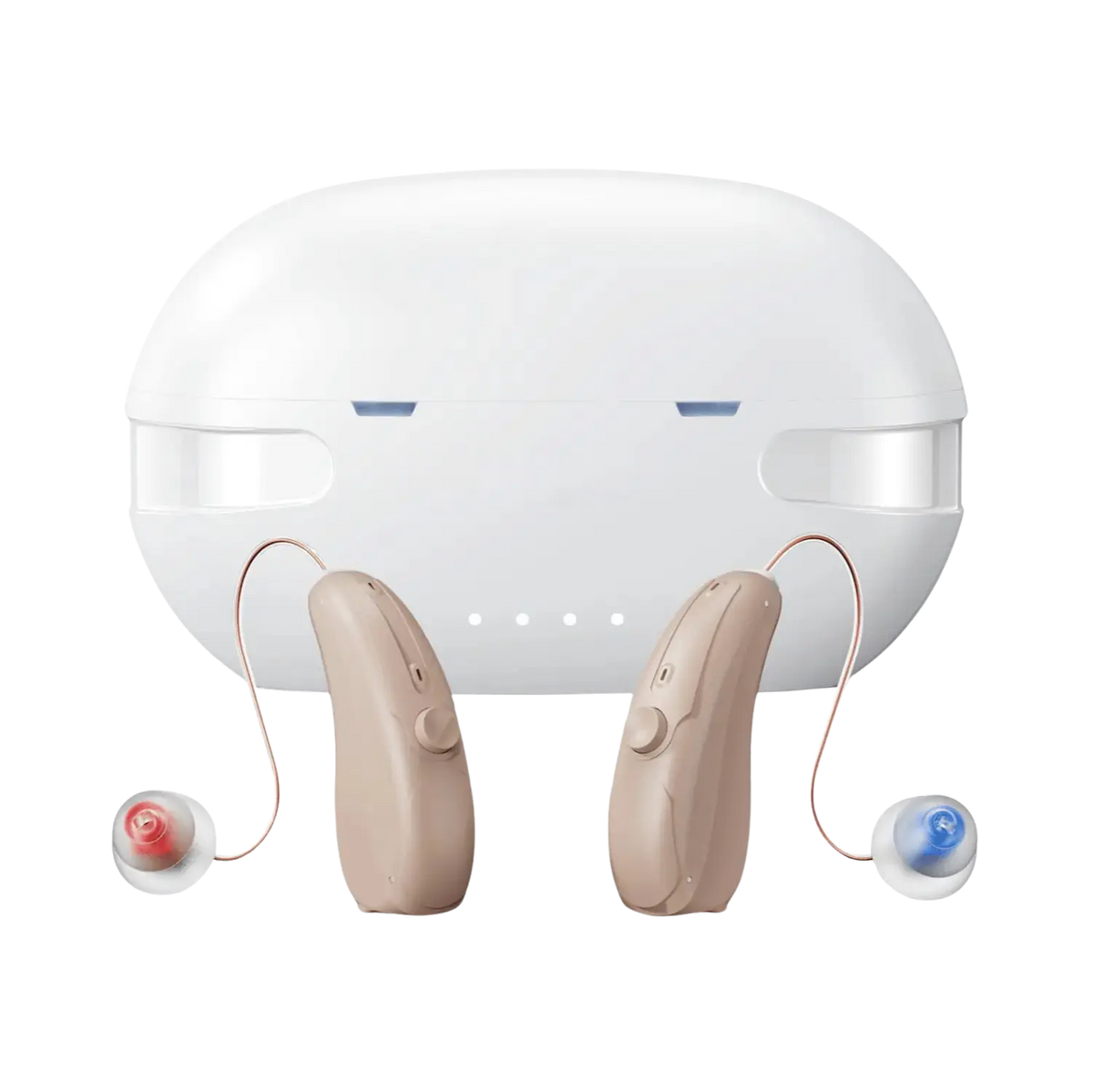
Labhraíonn torthaí mar seo le cosc, ach bhí caillteanas éisteachta intomhaiste ar go leor de na daoine fásta sa staidéar seo cheana sa raon a iompraíonn comhrá. Don ghrúpa sin, ní athbhunaíonn aon athrú aiste bia an méid atá caillte, agus is í an cheist phraiticiúil ná conas caint a chloisteáil go soiléir arís. Do dhaoine fásta a bhfuil caillteanas éisteachta éadrom go measartha orthu, tugann áiseanna éisteachta OTC FDA bealach díreach chun cóireála gan feitheamh le coinne cliniciúil.
Is ceann acu sin Panda Quantum, dearadh glacadóra-sa-chanáil atá tógtha do chaint shoiléir i dtimpeallachtaí torannacha, le próiseáil 16 chainéal agus laghdú torainn oiriúnaitheach a dhíríonn ar mhinicíochtaí comhrá a thomhais an staidéar seo. Ritheann sé 20 uair an chloig in aghaidh an luchtaithe le cás a sholáthraíonn trí luchtú iomlána breise le haghaidh 80 uair an chloig san iomlán, sruthaíonn sé glaonna, teilifís agus ceol thar Bluetooth, agus tagann sé le baránta 5 bliana agus triail 45 lá a thosaíonn nuair a shroicheann an gléas. Is féidir le haip chompánaigh roghnach tástáil éisteachta laistigh den chluas a rith agus an fhuaim a phearsanú do phróifíl éisteachta an úsáideora, cé go n-oibríonn Quantum go hiomlán gan an aip ná an tástáil.
Rabhadh amháin is fiú a athrá: tá áiseanna éisteachta OTC formheasta do dhaoine fásta a bhfuil caillteanas éisteachta éadrom go measartha orthu. Baineann daoine a bhfuil caillteanas dian nó domhain orthu an tairbhe is mó as feistiú cliniciúil le closmhéadrachtóir.

Teorainneacha an Taighde Seo
Ní féidir leis an dearadh trasghearrthach cúis agus éifeacht a bhunú, agus tuairiscíodh ionghabháil aiste bia é féin, rud a thugann earráid cuimhne isteach. Tagann na sonraí ó chiogal dhá bhliain amháin de NHANES, agus measadh ionghabháil chopair ón aiste bia seachas í a thomhas san fhuil, agus mar sin b'fhéidir nach nglacfadh na torthaí fíor-stádas copair gach duine.
Tugann na húdair féin faoi deara go bhfuil na sásraí atá taobh thiar den chomhcheangal, agus na cúiseanna nár tháinig sé chun cinn ach i measc na mban, fós le scrúdú. Ní nochtann an achoimre fhoilsithe foinsí maoinithe ná coinbhleachtaí leasa.
Cad Atá le Déanamh Leis Seo
Féach air seo mar fhianaise spreagúil ach luath go bhfuil ceangal idir cothú laethúil agus sláinte éisteachta. Is ciallmhar aiste bia cothrom a chuimsíonn bianna saibhre i gcopar go nádúrtha ar go leor cúiseanna, agus is fearr tástáil éisteachta seachas forlíontaí d'aon duine a bhfuil imní air/uirthi faoina chuid/a cuid éisteachta, cibé aiste bia atá aige/aici, ós rud é nach dtugann an staidéar aon fhianaise go n-aisiompaíonn copar a chur leis caillteanas éisteachta atá ann cheana.
Zhang Q, Wang F, Yang S, Yu Y. The Association of Copper Intake with Hearing Loss: a Cross-Sectional Study. Biological Trace Element Research. 2026. Retrieved from PubMed. https://doi.org/10.1007/s12011-026-05326-9